
Properties in Liguria
A property in Liguria may be intended as a holiday home, a permanent residence or an investment. Before viewing properties, it is worth defining your own purpose and annual budget: the purchase price alone says little about the location, ongoing costs, work that may be needed or how the property can actually be used.
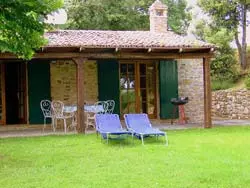 Ferienhaus im Hinterland von Imperia.
Photo: (under СС for commercial work) la-fattina/flickr.com
Ferienhaus im Hinterland von Imperia.
Photo: (under СС for commercial work) la-fattina/flickr.com
Property purchase: key facts
- Decide whether you want to live there, spend holidays there or rent it out periodically.
- Compare locations throughout the year: routes, amenities, access and transport links.
- Have the title, registry and building documents for the specific property professionally checked.
- In addition to the purchase price, allow for acquisition costs, maintenance and potential renovations.
- Rental income, permitted uses and tax implications are not guaranteed and must be checked against current requirements.
Clarify your intended use and location first
An apartment by the sea, a house in a historic centre and a building in a mountain village all have different requirements. Consider how often you will use the property, whether you want to manage without a car and which journeys you will need to make regularly. View properties in more than just fine weather: access, slopes, parking, shops and transport links matter in everyday life just as much as the view. Compare several places according to your actual needs, not just their reputation as holiday destinations.
If renting is part of your financial calculations, treat it as a possibility, not a guaranteed source of income. Check whether the location and the specific property are suitable for the intended use. Ask the local council and relevant professionals in advance which local, tax and administrative requirements apply to your situation. Vacancies, maintenance, insurance, management and seasonal demand can all affect the figures.
Have the building’s condition and documents checked independently
During a viewing, assess the building’s condition systematically: roof, façade, windows, damp, heating, utility systems, terraces and shared areas. Ask about completed work, invoices, outstanding defects and foreseeable repairs. For apartment buildings, the owners’ association minutes, planned works and ongoing charges are among the documents you should understand. A qualified technical survey can supplement what you see for yourself; if there are significant risks, do not rely solely on photographs or verbal assurances.
Before making a binding commitment, have a professional review the documents for the specific property. In particular, have the proof of ownership, land registry and cadastral details, and building and planning documentation checked against one another. If anything is unclear, request written answers and the necessary evidence before committing yourself. Which checks are required in your case depends on the property and your circumstances.
Work out the purchase price, taxes and ongoing costs
Set aside a financial buffer for notary fees, taxes, financing, translations and technical inspections. You may also need to budget for renovations, ongoing maintenance, insurance, service charges and looking after a property that is unoccupied for periods of time. For each item, check whether it is a one-off or recurring cost. Do not rely on generic online estimates or on promised returns that are not backed up by evidence.
The Agenzia delle Entrate’s guide to buying property explains the Italian purchasing process, tax considerations and possible reliefs. The available edition dates from March 2024, so check the current rules with a notary or tax adviser before signing a contract. If you do not speak Italian, arrange a reliable translation of important documents and have deadlines and contractual implications explained to you.
Budget realistically for renovations
For older buildings, necessary work can have a major impact on the overall cost. Do not settle for a rough estimate: ask what work is included, which permits or additional professionals may be needed, and how long the work is expected to take. Check whether materials can be delivered and tradespeople can access the property, especially in narrow lanes in historic centres or at remote houses. If you are buying from abroad, plan for translations and reliable communication with everyone involved. Viewing the property at different times of day can also help you assess noise, light and accessibility more accurately.
Make your decision step by step
Before you start looking, write down your must-haves, total budget and intended period of use. View suitable properties, keep a record of unanswered questions and compare less visible factors too, such as access, winter conditions and maintenance. Get professional advice before signing a preliminary contract or paying any money. Only when the property documents, condition, costs and intended use all align can you judge whether the property is right for your plans.
