
Driving in Liguria: roads, ZTLs and parking
A car lets you reach valleys and places in Liguria that are away from the coastal railway. For trips between larger coastal towns, travelling by train and bus may be more relaxing. Choose based on your route and accommodation, and check access, parking and any ZTL restrictions before you arrive.
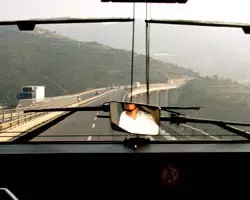 Auf der Autobahn zwischen Genua und Ventimiglia.
Photo: Olga N
Auf der Autobahn zwischen Genua und Ventimiglia.
Photo: Olga N
Driving at a glance
- The A10 and A12 follow long stretches of the coast; the A6 connects Turin and Savona.
- Check current information on motorway sections, roadworks and traffic before setting off.
- Italian cities have local ZTL access restrictions, with specific hours and exemptions.
- A valid driving licence issued by an EU country is recognised throughout the EU.
- Parking rules, toll lanes and access permits depend on local signs and regulations.
Motorways and the final stretch
The A10 runs along the western coast from Genoa towards Ventimiglia, the A12 serves the eastern coastal stretch, and the A6 leads from Turin to Savona. The A7 connects Genoa with Milan, while the A26 links the Alessandria area with Genoa. These main routes are useful for planning the broad outline of your journey, but they do not tell you how long it will take to reach your accommodation in a valley or on a hillside. Side roads can be narrow and winding. Allow plenty of time for the final stretch and, in bad weather, check whether you can reach your accommodation via the planned access road.
Roadworks, closures and traffic conditions can change at short notice. Before setting off, check the traffic and roadworks information for Liguria and confirm which operator is responsible for your motorway section. A route that looks short on the map may take longer because of coastal traffic or necessary detours. If you are visiting several coastal towns, compare driving with the train connections along the coast.
ZTLs and access to historic town centres
Many Italian cities restrict traffic in certain areas known as a Zona a Traffico Limitato, or ZTL. Rules, hours and exemptions vary from place to place. An electronic sign such as “Varco attivo” indicates that access restrictions are in force; enter only if you are explicitly permitted to do so. Check additional signs and the applicable hours. A navigation app is no substitute for road signs or the required permit.
If your accommodation is in or near a ZTL, ask before you arrive whether the hotel or garage can register your number plate and how you can unload your luggage. Ask them to confirm the route to the car park in writing. For restaurants and sights in the old town, it is often easier to park outside the restricted zone and cover the final stretch on foot or by public transport. Check the rules separately for Genoa, Savona or the specific place where you are staying.
Tolls, parking and documents
Italian motorways generally charge tolls. Choose a lane early, and use an electronic toll lane only if your vehicle has the appropriate device or you have a service that is explicitly accepted. Follow local signs, road markings and time limits on roads and in car parks. Don’t wait until you arrive to look for a parking space if your accommodation is in a narrow old town or on a steep road.
A valid driving licence issued by an EU member state can be used in the EU; provisional certificates are not accepted as a substitute. Also check your vehicle documents and insurance cover. The EU information on driving licences and motor insurance explains the general rules and notes that different requirements may apply to non-EU licences. If you are hiring a car, check the coverage area, excess, additional drivers and access rules before signing the agreement.
Combining driving and train travel
For cities and towns along the coast, travelling by train can save you the hassle of finding parking; a car gives you more freedom to reach places that are not near a station. You do not have to rely on just one mode of transport for your whole trip. Plan a car-free day in a larger city and use the car for a specific trip inland. If you hire a car, compare the pick-up location and return time with your flight or train, and check whether your accommodation has a parking space. This will help you make the most of your journeys, budget and visits.
