
Exploring Liguria by train: coastal towns and connections
The train is a convenient way to connect several towns along the Ligurian coast. However, when visiting remote mountain villages or staying far from a station, always factor in the final leg by bus, taxi or car.
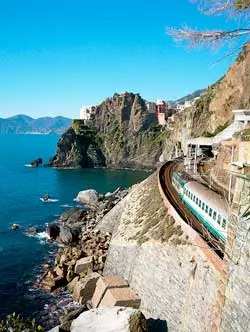 Zugfahrt entlang der Küste.
Photo: (under СС for commercial work) Goldmund100/flickr.com
Zugfahrt entlang der Küste.
Photo: (under СС for commercial work) Goldmund100/flickr.com
At a glance
- The coastal rail line connects towns from Ventimiglia via Genoa and Savona towards La Spezia.
- Regional timetables and notices about engineering works can change; check your specific journey on the day of travel.
- In some places, the station is not right next to your accommodation, the old town or the beach.
- Mountain villages may require a connecting bus or car.
Travel the coastal line in stages
Regional trains make it easy to link many cities and coastal towns between Ventimiglia, Genoa, Savona and La Spezia as day trips or overnight stops. The train is especially useful if you choose one town as a base and want to avoid looking for parking in city centres. Before booking accommodation, compare its exact location with the station and the places you plan to visit. Getting between the station, the old town and the harbour in a larger city such as Genoa calls for different planning than in a smaller coastal town.
If you are visiting several places, you can split the route into manageable stages instead of travelling long distances from the same base every day. Accommodation near a station makes it easier to set off with luggage, but check for stairs, steep slopes or a long walk as well. If you are travelling early or late, do not rely on journey time alone: take transfers and connections on the last available services into account.
Check timetables and engineering works on the day of travel
Regional timetables vary by route and period of validity. Before setting off, search for your journey again using your travel date and time, and check whether engineering works, altered stops, replacement buses or cancellations have been announced for that day. The official page for Trenitalia’s digital regional timetables provides regional timetable information; a single PDF timetable does not guarantee that services are running as shown.
Allow plenty of time for transfers, especially if you are travelling with children or luggage, or have reduced mobility. If the last train leaves early or a delay could make you miss your connection, consider in advance whether an extra night, a taxi or an alternative route might be an option. For important connections—such as on the day of a ferry departure or flight—do not plan around a tight transfer window.
Check the station and your destination together
A station may be on the edge of the old town, with stairs or steep slopes between it and your accommodation. Check the walking route on a map and ask your accommodation about elevation changes, access with luggage and possible transfers. In hilly places, distance in metres tells you little about how easy the route will actually be. For beach access or historic centres, walking routes and stairs may also matter more than the train journey time.
If you need help boarding, check the assistance service available at your specific station and arrange it in advance. Also check for lifts and step-free routes; equipment may be out of service. For your specific journey, follow the information provided by the railway and station operators.
When a bus or rental car makes sense
For mountain villages and destinations away from the coast, the train often will not take you all the way to your door. Check the local bus from the station, the days it runs and the last return service. If the connection does not fit your itinerary, a taxi or rental car may be a better option. Consider whether staying in another town would make getting around easier.
A rental car can be useful for visiting several remote destinations, but in coastal towns you will also need to consider parking and access restrictions. The page on car hire in Liguria can help you compare costs and terms; information about driving, parking and ZTL zones can help you plan for historic centres. For a day or two, switching modes of transport may be more practical than having a car for your entire stay.
Plan a route without unnecessary detours
First choose where to stay and which places matter most, then look for the best connections between them. This will quickly show whether a journey involves a transfer, an additional bus or a longer walk. If you are visiting the Cinque Terre or other towns, check connections for the specific day and allow for possible restrictions. Fares, train types, reservation requirements and ticket conditions can vary by connection. Save the operator’s latest information and check it again before each journey.
