
Diano Castello: Medieval Borgo, Churches and Wine
Accommodation in Diano Castello, Liguria, Italy
Diano Castello lies above the Golfo Dianese and is a town in its own right, not a seaside district of Diano Marina. A visit here means swapping the beach resort for a compact historic borgo with medieval traces, churches and a wine-making tradition. This distinction matters when planning: sightseeing here works best as a dedicated outing, with time for the lanes and historic architecture; beaches and a wider choice of shops are down on the coast.
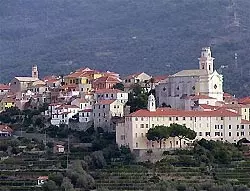 Diano Castello ist ein schöner Ort in Meeresnähe. Bis zum Strand von Diano Marina sind es etwa 1,5 Kilometer.
Photo: Rainer Lenk
Diano Castello at a glance
- Piazza Clavesana was the borgo’s old administrative centre; the town statutes mention the square as early as 1363.
- The official visitor guide describes the remains of a palace dating from the late 14th century and a tower from the 13th century; it presents the palace’s attribution to the Clavesana family as a possibility.
- The main churches include the Assunta, San Giovanni and the Baroque parish church of San Nicola da Bari.
- Pigato and Vermentino are among the wines in the Riviera Ligure di Ponente DOC.
- The local tourist information office lists bus routes 31 and 31bis; check operating days and departure times again before travelling.
Piazza Clavesana: the historic heart
Piazza Clavesana is a good place to start your walk. The local tourism website describes it as the former administrative centre of the medieval town and refers to the statutes of 1363. Remains of a late-medieval palace and a 13th-century tower are documented around the square. The source is cautious about the palace’s origins: a connection with the Marquises of Clavesana is treated as a hypothesis, not a confirmed attribution.
From here, it is worth slowing down rather than simply ticking off individual façades. The borgo reveals itself through its lanes, squares and succession of religious and civic buildings. Allow plenty of time for photo stops and short breaks; because of the hillside setting, this is not a flat stroll by the sea. If steps or long uphill sections are a concern, check the exact route in advance and don’t count on taking an impromptu shortcut.
The Assunta, San Giovanni and San Nicola
According to the local visitor guide, the church of Nostra Signora dell’Assunta is the oldest in the borgo and dates back to the 10th century. Although later alterations have shaped its present appearance, a visit takes you far back into the town’s history. The church of San Giovanni stands outside the former walls and was built at the end of the 13th century. Its ceiling is particularly noteworthy, with around two hundred painted panels from the 15th century—a specific artistic detail that makes it worth looking inside, if the church is open.
The parish church of San Nicola da Bari represents a different era. The present Baroque building was constructed between 1699 and 1717. Together with the older churches, it makes for a varied walk through different periods of architecture, rather than a visit focused on a single attraction. Opening hours, services and possible access restrictions may change; check them on the day of your visit before making a church visit a firm part of your plans.
Wine and olives: flavours of the hinterland
The hills around the Golfo Dianese bring together olive groves and vineyards. Pigato and Vermentino are a good introduction to the local wines: regional sources classify both under the Riviera Ligure di Ponente DOC. The town’s official page about the Premio Vermentino wine competition highlights the importance of wine to Diano Castello, but it should not be taken as confirmation of a fixed date for the next event. If you are planning a tasting or winery visit, check opening days and make a reservation directly with the producer.
The culinary scene also features the Taggiasca olive and the olive oil made from it. You can combine a visit to the borgo with a meal or a shopping stop that puts the region’s wine and olive-growing traditions centre stage. Specific markets, producers and tasting times vary by season and should be confirmed in advance.
The difference between Diano Castello, Diano Marina and Cervo
For a seaside stay, Diano Marina makes a good complement: it has a sandy beach and pedestrianised centre, while Castello offers a historic hillside town centre. Cervo also combines an old town with a coastal setting, but its position and views over the sea give it a character of its own. For a longer town visit with harbour and urban history, you could include Imperia.
If you would like to stay in the borgo, you can look at accommodation in Diano Castello based on location and your travel plans. For a day trip, it makes sense to decide in advance whether you want to focus on the churches, the old administrative square, or a wine and food stop. That way, your visit becomes more than a quick detour between two beach outings.
Getting there and getting around
Diano Castello has no train station in its town centre. If you arrive by train, you will need to plan a separate onward journey from Diano San Pietro station. Diano Marina’s tourist information office lists bus services on routes 31 and 31bis to Diano Castello and the railway station; it is a useful starting point for checking the latest bus information for the Golfo Dianese. Timetables may vary by day of the week and season. Before setting off, check the route, operating day and return journey rather than relying on a service you used in the past.
In the borgo itself, wear comfortable shoes because of the hillside setting, and allow for possible church closures. Without up-to-date information on routes and access, it is not possible to guarantee a set walking time or a fully accessible route. If you are travelling by car, check current information about parking and access locally or with your accommodation.
Frequently asked questions about Diano Castello
Is Diano Castello a district of Diano Marina?
No. Diano Castello is a separate town, with a historic borgo above the coast. Diano Marina is the separate seaside resort on the gulf.
Which sights should I include in my plans?
Start at Piazza Clavesana and, depending on opening hours, add the Assunta, San Giovanni and San Nicola da Bari. San Giovanni is particularly interesting for its painted ceiling.
Which wines are typical of the area?
Pigato and Vermentino are among the wines in the Riviera Ligure di Ponente DOC.
Can I get there by bus?
The local tourist information office lists routes 31 and 31bis. Check the latest timetable, including operating days and return services, as connections may change.
