
Corniglia: Explore the village high above the sea on foot
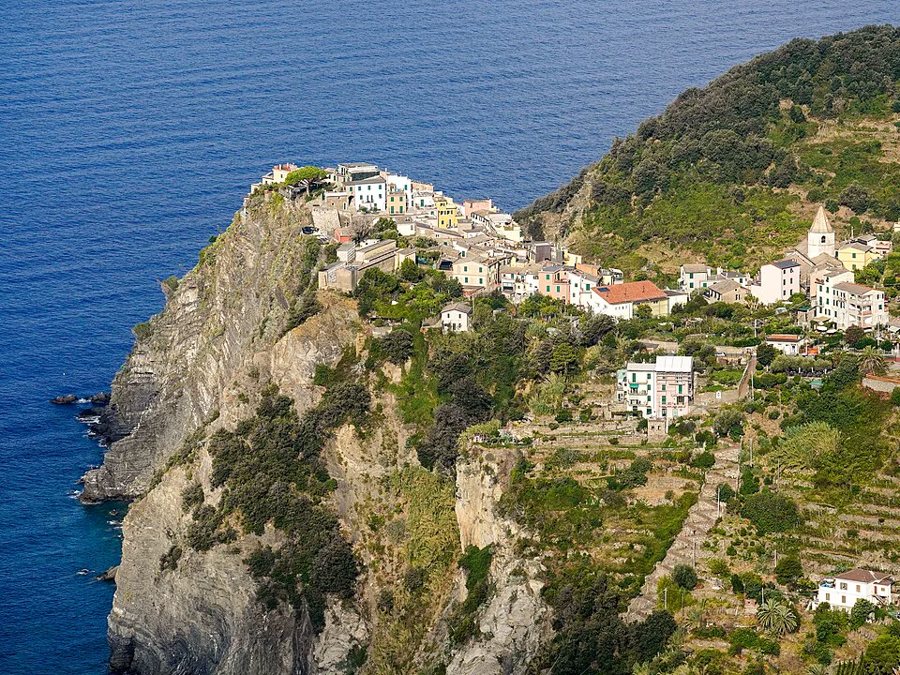
Corniglia differs from the other villages of the Cinque Terre because of its location: it sits on a high cliff and is almost inaccessible directly from the sea. If you arrive by train, you’ll need to account for the elevation difference between the station and the village center. The climb up the Lardarina consists of 33 flights and 377 steps; alternatively, a road also leads uphill from the station to the village. Under the timetable in effect from November 3, 2026, a shuttle bus also connects Corniglia and the station in both directions, with departures throughout the day. This choice shapes your visit and is particularly important if you’re carrying luggage or would prefer to avoid lots of steps.
From the station up to the village
The Lardarina is a distinctive approach and a first encounter with Corniglia’s hillside setting. It climbs to the village in several flights of brick steps. If you choose the stairs, adjust your pace to your fitness level and plan for breaks. The road avoids the steps, but not the climb: it also rises from the station to the village. In the historic center, you’ll still walk along steep, sometimes stepped lanes. Corniglia itself is surrounded on three sides by vineyards and terraces; the main street, Via Fieschi, follows the settlement’s elongated shape. A walk along this route shows how the village fits onto the narrow plateau.
From Via Fieschi, it’s worth taking a detour to Largo Taragio. The square took its present form in the 18th century and is dominated by the Oratorio di Santa Caterina. Continue on to the parish church of San Pietro, a Gothic-Ligurian building dating from 1334. The white marble rose window dates from 1351. Inside, you’ll find a 12th-century baptismal font, statues of the Evangelists, and a multi-panel altarpiece. These details make the church well worth a visit, even if your main interest is the landscape.
Views and vineyard landscape
In Corniglia, the sea views are different from those in the lower-lying villages: you look down on the coast, while the lanes through the village center hug the rocky ridge. Take time to pause at viewpoints rather than treating the stairs simply as a necessary link to the train. At the edges of the village, the surrounding agricultural landscape comes into view. Vineyards and terraces extend to Corniglia’s outskirts, linking views across the coast with the village’s long farming tradition.
If you’re visiting via the station, half a day, with time for breaks, is a realistic plan. If you’d like to avoid the stairs, take the road instead of the Lardarina; this route also climbs uphill, and the lanes in the village remain steep and sometimes stepped. Corniglia is especially suited to travelers who value the elevated village center, the church, and the cultivated landscape more than direct access to the water.
Corniglia as a base
The overview of the five villages helps you compare Corniglia’s location with the coastal villages. For more on the background of the Cinque Terre vineyard terraces, see the article on the landscape. If you’re traveling without a car, the page on train connections in Liguria explains the railway’s role along the coast. If you’re looking for a place to stay in the village, browse accommodation in Corniglia; bear in mind the elevated location and the route from the station. As a broader alternative for planning your stay, see the overview of accommodation in Liguria.

