
Manarola: Explore the Village, Marina and Terraces
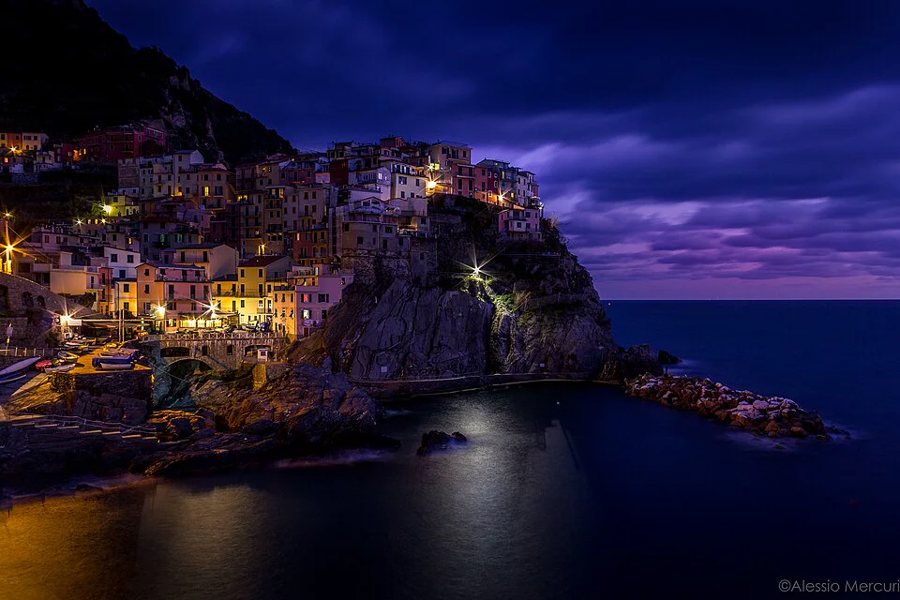
Manarola is best explored in two directions: first, down to the narrow marina, then back up to the historic heart of the village and the terraced hillsides. The houses seem to stand right on the rocky coast, yet the surroundings are a reminder that the village was shaped by more than the sea. Wine and olive growing are part of its history and shape the landscape above the settlement. When visiting Manarola, it is therefore worth combining the famous view of the houses with a walk through the village and a look at the terraces.
The Marina, Lanes and Piazza Papa Innocenzo IV
Start in the lower part of the village and follow the lanes towards Piazza Papa Innocenzo IV. The route reveals Manarola’s compact layout: the narrow marina lies at the foot of the houses, while the village centre continues higher up the hillside. Several historic buildings form a cohesive ensemble around the square. The Church of San Lorenzo was built in 1338 in the Gothic-Ligurian style; its three-aisled interior was later given a Baroque design. Beside it stands the white, square bell tower, which originally also served as a lookout and for defence. The 15th-century Oratorio dei Disciplinati della Santissima Annunziata and the former Ospedale di San Rocco are also part of this square.
Another stop is the old mill, or oil mill, in the lower part of the village, which has been restored by the national park. It points to the agricultural heritage that often recedes into the background behind today’s scenic views. If you are interested in the village’s history, you can see the buildings as a short sequence: from the water and working routes below, up to the square with its church and tower. This makes your visit more than just a photo stop at the marina.
Beyond the Village to the Terraces
Above the village centre, the scenery changes: instead of narrow lanes, the landscape is defined by dry-stone walls, vineyards and olive groves. The terraced landscape shows how much work has gone into these steep slopes. Choose a short scenic walk if you mainly want to see how the village and its cultural landscape fit together. A longer hike requires more time and a suitable level of fitness; plan it as a separate activity rather than a brief detour.
Planning Your Visit and Accommodation
Half a day is enough for the marina, village centre and a leisurely detour to the edge of the village; allow more time for a hike or a trip to other villages. Manarola is a good choice if you want to experience a compact settlement with strong ties between the coast and the vineyard landscape. The comparison of the five Cinque Terre villages puts Manarola in context alongside its neighbours. For more about the landscape above the village, read about the terraces of the Cinque Terre. The coastal railway connects the villages, making it easy to visit them in sequence, while the Manarola accommodation listings can help you find a place to stay in the village. If you are staying elsewhere, you can also find accommodation in Levanto; in that case, plan your visit to Manarola as a day trip by train.

