
Bolano: a medieval village with views over the Magra Valley
Accommodation in Bolano, Liguria, Italy
Bolano is a hilltop village between the Val di Magra and Val di Vara. Historic lanes, local art and views from the slopes set it apart from Ceparana on the plain.
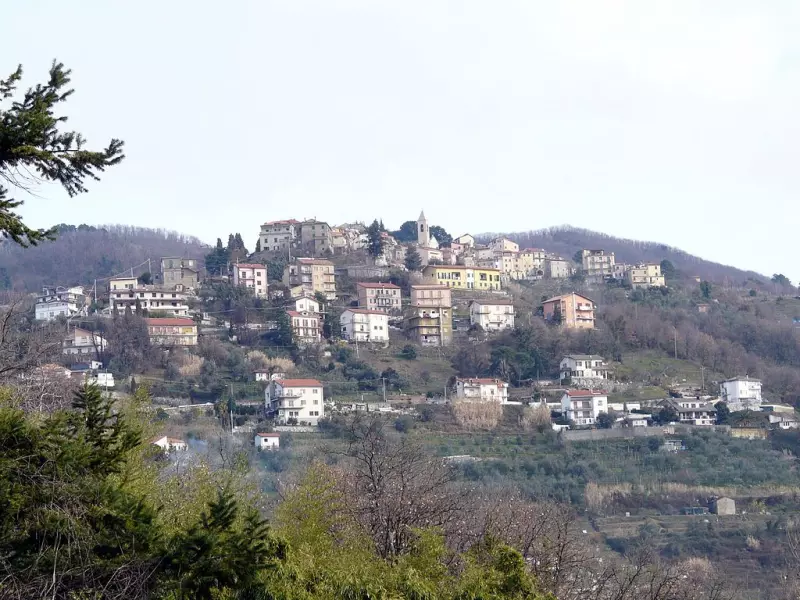 Bolano ist ein süßer Ort, in dem die Spuren des Mittelalters noch deutlich zu erkennen sind.
Photo: Davide Papalini / Wikipedia.de, CC BY-SA 3.0
Quick facts
- Worth seeing: medieval gates, remains of the castle and the Oratorio dei Santi Antonio e Rocco.
- The municipal area rises to Monte Grosso at 594 metres.
- The Alta Via climbs to Bolano from Ceparana.
- Check trail conditions and markings before setting out on a hike.
Medieval historic centre and local history
The historic centre has a largely preserved medieval layout, with squares, narrow lanes and three former entrances: Porta Castello, Porta Stazon and Porta Fontana, now called Porta Chilosi. Remains of the former Malaspina castle can be seen at the top of the village. The “Dietro le Mura” path runs outside the western village wall and offers a clear connection to the old fortifications.
The best way to explore these features is as part of a single walk through the village: the gates mark former entrances, while the remaining sections of wall show how compact the historic centre once was. The short path outside the walls offers a different perspective on the lanes and hillside setting. A single surviving gate should not be mistaken for the entire castle; only remnants of the former fortifications survive, not a complete castle complex.
The main buildings include the parish church of Santa Maria Assunta and the Oratorio dei Santi Antonio e Rocco. The oratory is documented as having an 18th-century Ligurian organ façade, along with works by Simone Barabino and Stefano Lemmi. The area’s history reaches further back: the municipality refers to finds from the Liguri-Apuani people and a Roman “statio” on the plain of Ceparana. The Roman settlement therefore was not confined to today’s hilltop village, but also extended to the lower-lying plain.
Views and trails in the hinterland
The municipal area stretches from the plain near Ceparana to Monte Grosso, at 594 metres. From the slopes, views open across the Vara and Magra valleys, towards the Apuan Alps and in the direction of the Golfo dei Poeti. Terraced vineyards and olive groves give way to wooded slopes. This landscape helps explain why a visit to the village offers a different experience from a drive across the plain; however, it does not guarantee that tastings are available or that a viewpoint is staffed.
According to the municipality, the Alta Via dei Monti Liguri begins or ends in the Bolano area. The local access route climbs from Ceparana to Bolano. This makes it possible to combine the trail with the change in elevation between valley and hill, but the municipality does not provide a reliable walking time or up-to-date trail conditions. Check the trail markings, difficulty and current accessibility before setting out. Weather, steepness and your own equipment are also important when choosing a route; if conditions are unclear, a walk around the village is the more predictable option.
The municipal information on the landscape and the Alta Via describes the viewpoints and local route. This helps you decide in advance whether you are planning a short visit to the historic centre or a hike in the hinterland.
The change in elevation also explains why Ceparana and Bolano do not feel like one compact settlement. Ceparana lies on the plain, where there are traces of earlier Roman settlement; up in Bolano, gates, lanes and views define the scene. Visiting both places means moving between two distinct landscape and historical settings. For a focused visit, using the specific place names and starting point is more helpful than referring generally to “Bolano.”
Link Bolano with the Magra area
You can focus your visit on the historic centre, “Dietro le Mura” and the main historic buildings; if you also want to hike, treat it as a separate part of your itinerary. Other places in the valley include Santo Stefano di Magra, a transport and historic centre, and Castelnuovo Magra with its bishop’s tower. La Spezia adds a harbour and museums to an inland itinerary; the La Spezia provincial guide puts the coast and hinterland in context.
If you would like to stay in the area, compare accommodation in Bolano by location. Availability and the journey between your accommodation, the village and destinations in the valley depend on your travel dates.
