
Specialties from Liguria
Ligurian cuisine draws on herbs, vegetables, olive oil and ingredients that appear differently on the table in coastal towns and inland areas. Trying local specialties often reveals something about their origins, the season and the traditional way a dish is eaten.
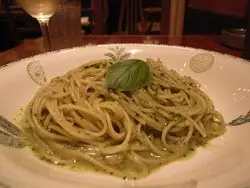 „Pesto alla Genovese“, Ligurien
Photo: (under СС for commercial work) matsuyuki/flickr.com
„Pesto alla Genovese“, Ligurien
Photo: (under СС for commercial work) matsuyuki/flickr.com
Quick facts about specialties from Liguria
- Pesto alla Genovese is an unrestricted recipe name; Basilico Genovese DOP refers to a protected ingredient and does not automatically cover the entire sauce.
- Focaccia di Recco col formaggio IGP is specific to Recco, Camogli, Sori and Avegno.
- The Taggiasca olive is especially associated with western Liguria.
- Farinata is a savory specialty made from chickpea flour; in La Spezia, mussels are part of the local food culture.
- Menus, ingredients and seasonal offerings vary by location and establishment.
Genoa: pesto and herbs
Pesto alla Genovese is Liguria’s best-known sauce. The classic recipe uses basil, olive oil, pine nuts, garlic, salt, and grated Parmesan and Pecorino; traditionally, the ingredients are ground in a mortar. In Genoa, pesto is often served with trofie or trenette. Some kitchens also serve pasta with potatoes or green beans; these are accompaniments to the dish, not ingredients in the pesto.
When shopping, it is worth distinguishing between an ingredient and the finished sauce. The protected designation Basilico Genovese DOP applies to basil grown and inspected according to specific rules. By contrast, the name “pesto” alone is not a protected designation of origin for the entire sauce. Read the labels and check exactly what is certified. When trying the dish where it originated, you can also ask whether the sauce was freshly made and which cheeses were used.
Genoa is easy to explore through its food, with a stroll through the old town. For more ideas for your stay, the Genoa city guide offers a useful overview. Pesto dishes can vary from restaurant to restaurant, with different levels of intensity and creaminess, so it would not be very helpful to treat one preparation as the definitive standard.
Recco area: focaccia col formaggio
Focaccia di Recco col formaggio is made with two thin layers of dough and a cheese filling, then baked until hot. The IGP designation covers Recco, Camogli, Sori and Avegno. If you want to try this protected specialty, you can combine a food-focused visit to the area with a trip to Camogli or a walk along the Golfo Paradiso. Look for the full name on the menu or sign; just any cheese focaccia is not automatically the same product.
Focaccia is best served warm and fresh. Ask the restaurant about the wait, portion size and ingredients, especially if you have food intolerances. At popular dining times, a quick stop can take longer than expected, so avoid scheduling another activity too tightly. A trip through Recco and the neighboring towns is better suited to a half-day outing of its own than to a stop between far-apart coastal destinations.
Western Liguria: Taggiasca olives and olive oil
Taggiasca is a well-known olive variety from western Liguria, particularly the Province of Imperia. The olives are eaten as table olives and are also used to produce oil. However, the variety and protected origin are not the same thing: if you are looking for a specific origin or seal, check the exact wording on the label and ask the seller. A jar of marinated olives and a bottle of oil are two different products, each with its own flavor and uses.
Olive oil is delicious on its own with bread, or served with vegetables and fish. When comparing oils, aroma, pungency, bitterness and personal preference are more helpful than a marketing claim on the bottle. If you would like to see the harvest or production process, ask a producer about visiting and the season. Farms are not necessarily open to visitors who arrive without an appointment; a booked tasting is usually easier to plan.
Farinata, vegetables and coastal dishes
Farinata, made from chickpea flour, is a savory specialty baked in the oven. Savona is also known for a version called “farinata bianca”; ask locally which version is available. The dish makes a simple snack or starter and can be served thin or thicker, depending on the establishment. If you want to try several dishes, share portions and leave room for other regional specialties.
In the La Spezia area, mussels are also locally known as “muscoli.” Together with herbs and olive oil, fish, mussels and vegetables form a different culinary focus from pesto or focaccia in the Genoa area. Daily offerings and the origin of ingredients depend on the restaurant. If you want to seek out local products, ask about the catch, preparation and side dishes.
Pairing wine and food
Ligurian wines vary according to their area of origin and grape variety. You could try a dry white wine with fish or mussels; another style might suit a heartier dish. These are suggestions based on taste, not hard-and-fast rules. For more help identifying a wine, see the overview of DOC, IGT and Liguria’s wine regions. A restaurant can often recommend a suitable local bottle and explain where it comes from.
A short food trail instead of a long list
For a short stay, consider choosing specialties by location: pesto in Genoa, focaccia in the Recco area, olive products in the west, and mussels or fish farther east. There is no need to cover this route in a single day. Choose one or two highlights, take travel time into account and book ahead if a tasting is part of your plan.
Ask about the ingredients and origin of local specialties, try them where they are rooted in the local cuisine, and do not expect every town to have the same menu. This makes food a thread running through your trip—from a visit to the market to dinner—without presenting any single recommendation as universally applicable.
Questions to ask when ordering and shopping
If origin matters to you, ask specifically about the producer, ingredients and protected designation. Terms such as “Ligurian,” “homemade” or “traditional” can describe a menu item, but on their own they do not tell you where an ingredient was grown or produced. For packaged products, compare the ingredients list with the origin information; when ordering at a restaurant, a quick question to the staff can help. Also check for allergens, as dishes may contain nuts, dairy products and other ingredients. This lets you satisfy your culinary curiosity while making choices that suit your needs.
