
Genoa: Old Town, Rolli Palaces and Ligurian Cuisine
Genoa is best explored on foot: from the harbor into the densely built Old Town, then uphill to the palaces of the Strade Nuove. If you have little time, don’t try to tick off the whole city. Instead, choose a walking route through the Old Town’s carrugi, squares and churches, and along Via Garibaldi; you can then leave time by the waterfront to take in the harbor and the hillside neighborhoods.
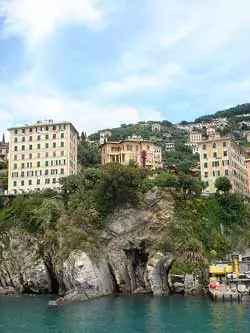 Genua ist eine Stadt mit reicher Geschichte. Die Altstadt von Genua gilt als die größte in Europa.
Photo: (under СС for commercial work) habi/flickr.com
Genua ist eine Stadt mit reicher Geschichte. Die Altstadt von Genua gilt als die größte in Europa.
Photo: (under СС for commercial work) habi/flickr.com
Genoa at a glance
- Genoa is the capital of Liguria and an important port city.
- The narrow lanes known as carrugi wind through the historic center.
- The Palazzi dei Rolli originated in a public system for accommodating guests, introduced in 1576.
- Forty-two palaces in the Strade Nuove and Rolli system are UNESCO World Heritage sites, inscribed in 2006.
- Changes in elevation, stairs and steep paths affect walking times in the city center.
Old Town, harbor and steep hills
Between the harbor and the hills, narrow lanes give way to lively squares and broad arcaded streets. The changes in elevation are noticeable: what looks like a short distance may involve stairs or steep paths. Comfortable shoes are a must, and for longer uphill journeys it’s worth checking out the local lifts and public transport. If you stay centrally, you can reach many places on foot; accommodation in Genoa can be compared by location.
The historic center is a good place to start. As you walk through the narrow lanes, don’t just go from one sight to the next: look out for portals, little shops, workshops and courtyards. Via Garibaldi leads to the Palazzi dei Rolli. The system was established in 1576, when selected aristocratic palaces were used to receive high-ranking guests. Today, 42 of these palaces are part of the UNESCO World Heritage site “Le Strade Nuove e il sistema dei Palazzi dei Rolli,” inscribed in 2006. Not all the buildings are regularly open to visitors; some house museums or public institutions. Before visiting, check which palaces are currently open. Background information and up-to-date visitor guidance are available on the official Rolli website.
Combine culture with a well-planned route
For a first day, a route from the Old Town to Via Garibaldi and then the harbor is a good choice. This way, you can enjoy a mix of lanes, palace façades and open views of the water without zigzagging across the city. If you want to spend more time visiting museums and churches, plan fewer stops and check opening days separately. The aquarium and the redeveloped harbor area make a separate outing; they don’t lie directly on every route through the Old Town.
Genoa is a good base for excursions into the Province of Genoa. Along the coast, the western Riviera di Ponente is quite different from the eastern Riviera di Levante. If you’re taking a road trip, it’s usually more practical to plan around train routes and overnight stops rather than returning to the same base every day.
What to eat in Genoa
Food is part of the city experience. Pesto and focaccia are well-known classics; bakeries and casual eateries also serve farinata made with chickpea flour, panissa and stuffed pasta such as pansoti with walnut sauce. Fish dishes are available in season. For a simple break, grab a focaccia to go and have an espresso where the locals stop for a quick one. In lively lanes, small, popular eateries are often a better choice than a restaurant right next to a major attraction.
Getting there and planning your stay
If you’re flying, Genoa Airport is close to the city. Train and bus connections, as well as local timetables, can change, so check schedules and transfers with the relevant operator on the day of travel. If you’re arriving by car, don’t plan to drive directly to every stop in the center: narrow streets, steep slopes and parking availability mean that combining a parking spot with public transport is often more relaxing.
A full day is enough for a first impression of the Old Town and Via Garibaldi. Two or three days give you time for museums, the harbor, local food and a trip to the coast. When choosing accommodation, consider how close it is to the Old Town or the train station, as well as the gradient of the final stretch: on a map, a neighborhood can look closer than it feels when you’re walking uphill.
Genoa rewards curiosity and taking the time to look around. A memorable moment might be stepping from a shady lane onto a sunlit square, or looking over the rooftops toward the harbor.
