
Province of Genoa: the city, Golfo Paradiso and Tigullio
The Province of Genoa brings together the port city, the small towns of the Golfo Paradiso, the coastal towns of the Tigullio and valleys in the Apennines. When planning your trip, it is worth thinking of the city, the coast and the hinterland as distinct types of stay.
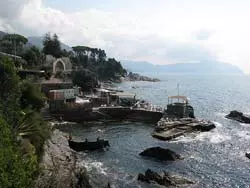 In der Provinz Genua finden Urlauber viele schöne Sandstrände, aber auch verlassene, romantische Buchten.
Photo: (under СС for commercial work) ho visto nina volare/flickr.com
In der Provinz Genua finden Urlauber viele schöne Sandstrände, aber auch verlassene, romantische Buchten.
Photo: (under СС for commercial work) ho visto nina volare/flickr.com
Quick facts
- Genoa is the province’s cultural and urban centre.
- The Palazzi dei Rolli and the Strade Nuove are UNESCO World Heritage sites.
- The Golfo Paradiso stretches east of Genoa as far as Monte di Portofino.
- Recco is known for focaccia col formaggio; Camogli combines a harbour, rows of houses and an old town.
- The Tigullio includes Rapallo, Santa Margherita Ligure, Portofino, Chiavari and Sestri Levante, among other towns.
- In the hinterland, valleys, villages and protected areas such as Parco dell’Antola make for day trips.
Genoa: history, art and Ligurian cuisine
Genoa is a city that deserves a visit planned in its own right. Between the harbour and the old town are narrow lanes, squares and palaces; the Palazzi dei Rolli recall the time when the city republic lodged guests in the homes of aristocratic families according to a public register. In 2006, 42 palaces belonging to the Rolli system and the Strade Nuove were added to the UNESCO World Heritage List. This is not just a single attraction, but an interconnected part of the city’s history that reveals itself as you walk through the streets. Some palaces are museums or open to visitors on occasion, while others are still in use. So check in advance which buildings will actually be open on the day you plan to visit.
Food culture is also part of a visit to the city. Pesto alla Genovese is the region’s best-known sauce, but Genoa also offers markets, bakeries and simple eateries where you can discover everyday cuisine. A food walk pairs well with a visit to an architectural landmark or museum. Given the narrow lanes and steep slopes, a comfortable walking route is preferable to an overpacked list of attractions. The Genoa city guide treats the old town, the Rolli palaces and local cuisine as distinct highlights.
Golfo Paradiso: coast between the city and the peninsula
East of the city, the Golfo Paradiso stretches from the Nervi area through Bogliasco, Pieve Ligure, Sori and Recco to Camogli. The towns are strung along small coves and hillsides by the sea; this is not one long beach promenade. In Bogliasco, an old bridge crossing shapes the townscape. Recco is known for focaccia col formaggio, while Camogli offers a different kind of walk, taking in the harbour, colourful houses and Castello della Dragonara. If you plan to walk to the Abbey of San Fruttuoso, check the route and conditions in advance; it is not just any stroll along the water. These differences make the gulf appealing to travellers who want to explore several towns, but they also matter when choosing where to stay. Not every accommodation is equally convenient for every cove or excursion.
For a day trip, you can make one coastal town your main destination and add a second only if the travel time fits your plans for the day. In Recco, the local speciality takes centre stage; in Camogli, the harbour views and local history go hand in hand. If you are more interested in nature, you can include the area around Monte di Portofino without committing to a particular route or boat trip. Details about Recco and Camogli can help you shape your outing around your interests.
Tigullio: different coastal bases
In the Tigullio, Rapallo, Santa Margherita Ligure and Portofino are close together, with Chiavari, Lavagna and Sestri Levante farther east. Rapallo is a larger coastal town with an old town and waterfront. Santa Margherita Ligure combines a harbour with villa architecture. Portofino is a small town on the peninsula, with a piazzetta, a church and Castello Brown; a visit focuses on the historic centre and its surroundings. The peninsula also has trails and scenery that merit an outing of their own. Staying in a larger town gives you different options for restaurants and evening walks than staying in a small borgo.
Chiavari and Lavagna give the eastern part of the Tigullio a more everyday, urban feel. Sestri Levante is known for its position between two bays. If art and history are your priority, you can use Genoa as your base; if you expect to spend more time at beaches and on coastal trails, compare bases closer to the Tigullio. The page on Portofino and the profile of Santa Margherita Ligure show two very different scales within the same stretch of coast.
The Apennines and countryside excursions
Behind the coast, the valleys rise into the Apennines. Parco Naturale Regionale dell’Antola encompasses mountain and woodland landscapes between the Scrivia and Trebbia valleys; towns such as Torriglia highlight the contrast with the coast. An outing like this is more a day in the countryside than a short extension of a beach visit. For hikes, check the specific route, trail markings, weather conditions and options for getting back. A map and plenty of time are advisable, since straight-line distance says little about the actual roads and walking routes.
There are cultural rewards to leaving the sea for the valleys, too: small town centres, churches and castles reflect a different history of settlement from that of the port cities. If you include these destinations in your plans, avoid squeezing too many places into one day and check whether the interiors are open to visitors. This way, you can experience the province beyond its coastal façade without relying on unannounced openings or particular transport schedules.
Planning the right mix
For a short stay, there are two clear options: Genoa for a culture-and-food weekend, or a coastal town as a base for the sea and shorter excursions. With more time, you can combine both perspectives by exploring the city first and then moving to the coast. Staying in the Tigullio is not automatically convenient for every excursion to Genoa or the Apennines; compare your accommodation’s location with the places you want to visit each day.
Before booking, ask yourself whether you enjoy changing locations every day or would rather get to know the same area in greater depth. Take slopes, parking, proximity to a railway station and the actual walk to your accommodation into account. In coastal towns, a lovely view may come with a longer walk. The accommodation overview for the Province of Genoa provides a starting point for comparing options. Then tailor your daily plans to your chosen base: visiting the Rolli palaces, having a meal in Recco, strolling through Camogli or heading to the Portofino peninsula each offers a different focus. This turns the name “Province of Genoa” into a concrete travel plan that distinguishes the city, coast and hinterland.
City break or coastal holiday?
Choosing between Genoa and the coast is not just a matter of scenery, but also of pace. In Genoa, you can build a day around a museum, a neighbourhood and a meal; the old town invites you to link short distances on foot. On the coast, the day depends more on which bay or town you are heading to. A stroll in Camogli, a visit to Portofino’s piazzetta and a day swimming each involve different timings and routes.
If you want to combine both experiences, choose an order that suits your arrival plans and compare actual travel times before booking. A day trip to Genoa from a coastal base is not the same as spending several days in the city with occasional excursions to the sea. For the Palazzi dei Rolli, check current visiting arrangements, as not every building is open as a museum all the time. You can still enjoy an art-historical stay without relying on a visit to any one interior.
