
Monterosso al Mare: Connecting the Old Town and Fegina
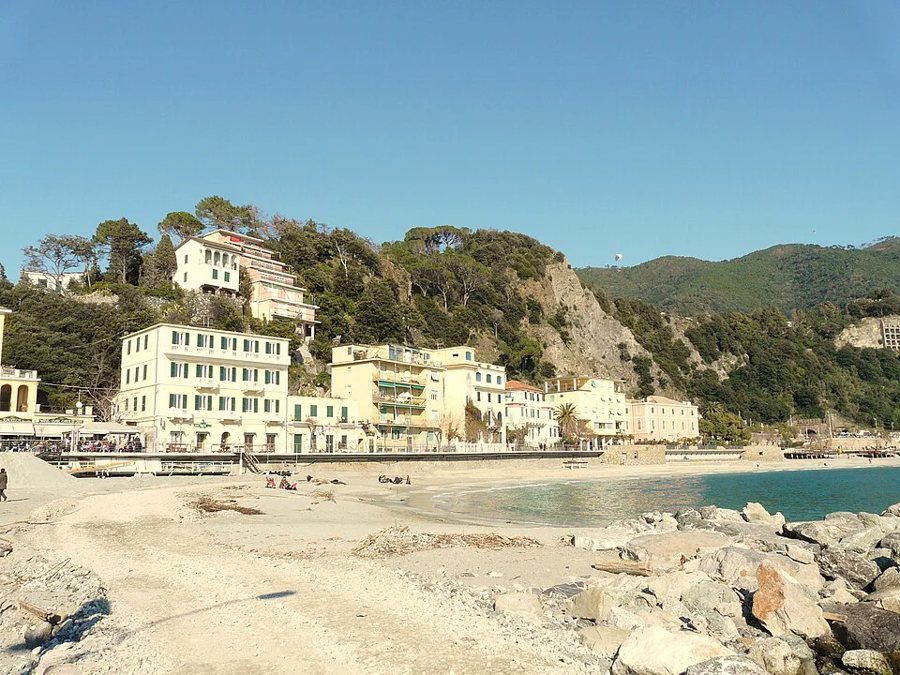
Among the Cinque Terre villages, Monterosso al Mare offers the clearest contrast between a historic old town and a more modern seaside area. In the old center, narrow lanes lead to the Church of San Giovanni Battista; on the hill between the old town and Fegina are the remains of the fortifications and Torre Aurora. Fegina, in turn, is the newer district, geared more toward spending time by the sea. When you visit Monterosso, you can explore these three areas as one continuous walk rather than planning your visit solely as a beach stop or a collection of historic sights.
Through the Old Town to San Giovanni Battista
Start in the old town and follow the narrow lanes to the parish church of San Giovanni Battista. Its Gothic-Genoese façade features alternating bands of light and dark stone. The bell tower, between the portal and the apse, also served a defensive purpose and was later heightened. This combination of religious architecture and military function helps tell Monterosso’s story: the village stood on an exposed stretch of coast and developed a significant defensive system.
From the old town, the route climbs San Cristoforo Hill, which separates the historic district from Fegina. The hill is home to the remains of the old fortifications and castle, including two surviving towers; Torre Aurora stands on the rocky coast. The 17th-century Capuchin monastery adds another stop to your visit. The climb is especially worthwhile if you want to understand how the two parts of town relate to each other as well as take in the coastal scenery. Wear sturdy shoes and allow time for the uphill sections; this is not a flat seaside walk.
From San Cristoforo to Fegina
After the hill, continue toward Fegina. The character of the town changes here: the seaside area is more geared toward spending time by the water, while the old town is defined by its winding lanes and historic buildings. Plan your break around what matters most to you: Fegina is a good choice for a longer stay by the coast, while visitors mainly interested in churches and history can spend more time in the old town and on the hill. This makes it easy to tailor the day to your priorities, even if you have limited time.
Half a day is enough to combine the old town, the hill and a short stay by the sea. Allow a full day if you want a longer beach break or a hike beyond Monterosso. The poet Eugenio Montale described Monterosso as rocky and austere, a refuge for fishermen and farmers. This literary perspective adds a cultural dimension to a walk through the landscape.
Monterosso as a Base for Your Trip
Monterosso is a good fit if you want to combine a historic town center, the hill between the two districts and a longer break by the coast in one place. The comparison of the Cinque Terre villages puts this combination in context alongside the smaller villages on the hillsides. For travel by rail, see the article on train connections along the coast. To choose where to stay, browse accommodation in Monterosso al Mare and compare locations near the old town and Fegina. If you’re arriving by car, you can use the information on driving access and parking in Liguria. For a broader guide to choosing where to stay, see the regional accommodation overview.

