
Framura
Framura is not a single, compact town centre, but a municipality made up of five hamlets stretching from the coast up the hillside to Castagnola: Anzo, Ravecca, Setta, Costa and Castagnola. This layout is key to planning your visit. If you arrive by train, you are close to the sea, not necessarily to the historic centre. A well-planned visit therefore either descends from Castagnola at the top or gradually climbs through the settlements from the station.
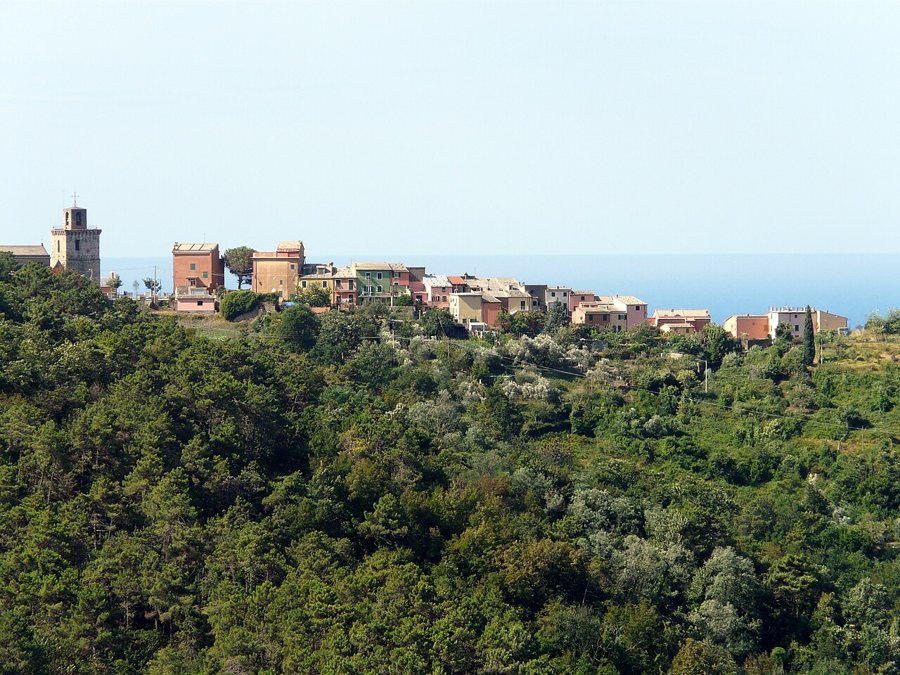
From the hilltop village to the sea
For an overview, start in Castagnola at San Lorenzo. The highest of the five hamlets offers views over the coast and headland; its church is an easy landmark to start from. From there, follow the connecting paths down to Costa, Setta, Ravecca and Anzo. The sequence makes the settlement pattern easy to understand: houses cluster on terraces, while stairs and old paths link the individual hamlets. Costa is home to the Church of San Martino, with a bell tower dating from the Early Middle Ages; inside are a painting by Bernardo Strozzi and a polychrome Baroque marble pulpit. Setta is the administrative centre and has medieval wall remains, stone arches and double-arched windows that point to its older buildings.
The path from Setta to Castagnola winds through narrow lanes and climbs steadily. The municipality describes the marked Sentiero 650 route, which takes around 30 to 40 minutes from the middle of Setta. If you start at the station or the small harbour, the cycle and pedestrian route, or the paths climbing up the hillside, lead to Costa; from there, continue along the ridge path. Alternatively, a municipal shuttle connects the station with the higher hamlets. Because of these differences in elevation, using the beach as your base is less suitable for sightseeing: choose your route so you do not have to repeat the same climb at the end of a long day and then make your way back down.
Coastal stretch and former railway line
Down by the sea are the small harbour and coves such as Porto Pidocchio and Vallà. The paths from the station to these swimming spots are short, but reaching the hillside hamlets takes more time and stamina. The former coastal railway corridor is now a walking and cycling path connecting Framura with Bonassola and Levanto. It works well as a separate coastal leg; avoid combining it thoughtlessly with the full hilltop circuit if you have only half a day. For regional connections, the Ligurian Rail Guide provides an overview of the coastal railway.
There are different options for an overnight stay: by the station and waterfront if you are travelling with luggage, or near the hillside villages if you want to set off on foot in the morning. Compare the La Spezia Province accommodation directory with the Ligurian accommodation overview. If you are including Framura in a wider trip along the eastern Riviera, consult the La Spezia Province Guide; if you are arriving by rental car, the guide to roads and parking may be helpful.
Which route suits your day?
If you are short on time, stay in the lower coastal area, visit the harbour and one of the coves, and take the railway path to Bonassola or Levanto. For a feel for the character of the place, follow the route Castagnola–Costa–Setta–Ravecca–Anzo, ideally starting at the top and finishing by the sea. If you walk it in the opposite direction, expect a steady climb and allow time for breaks. Framura is therefore especially suited to travellers who enjoy moving between sea and hills, rather than visitors looking for a flat promenade linking the station, old town and beach.
