
San Pietro in Varatella
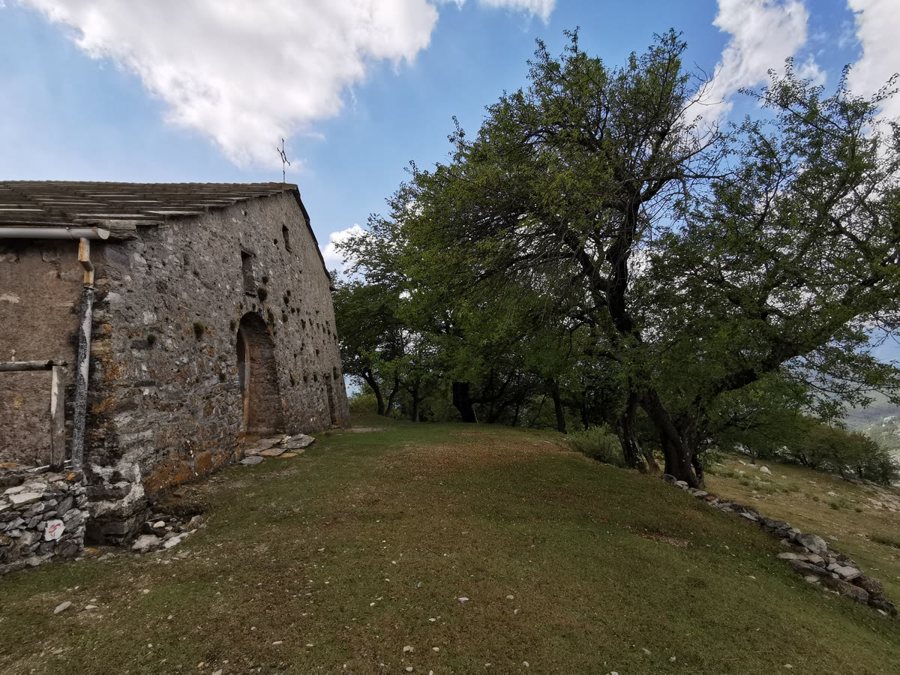
San Pietro nei Monti, also known as San Pietro in Varatella, stands on Monte Varatella above Toirano. The Benedictine abbey was founded before the year 1000 and developed into a spiritual and economic centre of the valley. Carthusian monks later lived here. The surviving church, the fresco of Saint Peter and the old path leading up to the monastery tell the story of monastic life, pilgrimage and the links between the coast and the hinterland.
Benedictines and Carthusians on the mountain
Significant land grants from the bishops of Albenga strengthened the Benedictines’ holdings. The monastery thus contributed to the religious and economic development of the Val Varatella. The Carthusians from Casotto took over the community from the Benedictines. As life on the mountain became increasingly arduous, the order moved its seat down into the valley, where the charterhouse was established. The monastery site on the summit then gradually lost its former function.
The history can also be read through the relationship between mountain and valley: on the heights stood the church, living quarters, kitchen, refectory, storerooms and a well with a cistern. In the valley, the charterhouse and the mills bear witness to the later presence of the Carthusians. These buildings reflect a monastic life that combined prayer, provisions and farming. For a broader overview of Liguria’s sacred sites, see Shrines in Liguria.
Church, stonework and the fresco of Saint Peter
The present building is a solid stone structure incorporating the church. It consists of a large single nave, with low Romanesque arches supporting the vault. The building was altered over the centuries and served not only for worship but also as accommodation for pilgrims. Outside, features of note include a sundial beside the former stable portico and a well whose parapet is carved from a single block of stone.
Behind the altar, built in 1937, is a 15th-century fresco depicting the Apostle Peter in papal robes. For centuries, the people of the valley directed their veneration towards this image. The Toirano Caves add a world of caves with prehistoric traces to the story of the monastery. For a stay in the area, see accommodation in Toirano.
The old path to San Pietro
The Via di San Pietro was an old route from Toirano to the monastery and also formed part of a wider network of roads. The historic salt road ran along the slopes below Monte San Pietro and joined a route towards the lower Piedmont at Giogo di Bardineto. It also provided access to the higher pastures. Alongside the main road, people from the valley and from Boissano used smaller paths that joined the mule track.
Along the historic route are places that reflect both everyday life and religious devotion. In Toirano, the traditional sequence of stops begins at Piazza San Martino. It passes the Church of Madonna del Rosario, the bridge over the Varatella and the mills, then continues past the charterhouse and the Chapel of Sant’Anna, along dry-stone walls, former shepherds’ huts and the Pietra del Gallo. The name Burdunaira recalls the tradition that pilgrims left salt there as an offering. Such place names preserve memories of trade, pastoral farming and pilgrimage. The traditional feast in honour of San Pietro is held on 1 May; every five years, a procession makes its way from Borgo Toirano up to the summit. In the Province of Savona, Loano offers another starting point for exploring this coastal and mountain region.
