
Beaches of Liguria
In the west: more sand and longer stretches of beach
The Riviera di Ponente is a good choice for visitors looking for a more traditional sandy beach with a gentler entry into the water. Alassio, for example, is known for its long, fine-sand beach and gradually sloping seabed. This can be practical for families and longer days at the beach, although access and facilities vary from one section to another. A beach town is more than just its shoreline: the promenade, narrow streets and cafés make it easy to combine a day of swimming with a stroll around town. For an outing in the coastal town and its surroundings, the page on Albenga and the Riviera di Ponente is a good place to start.
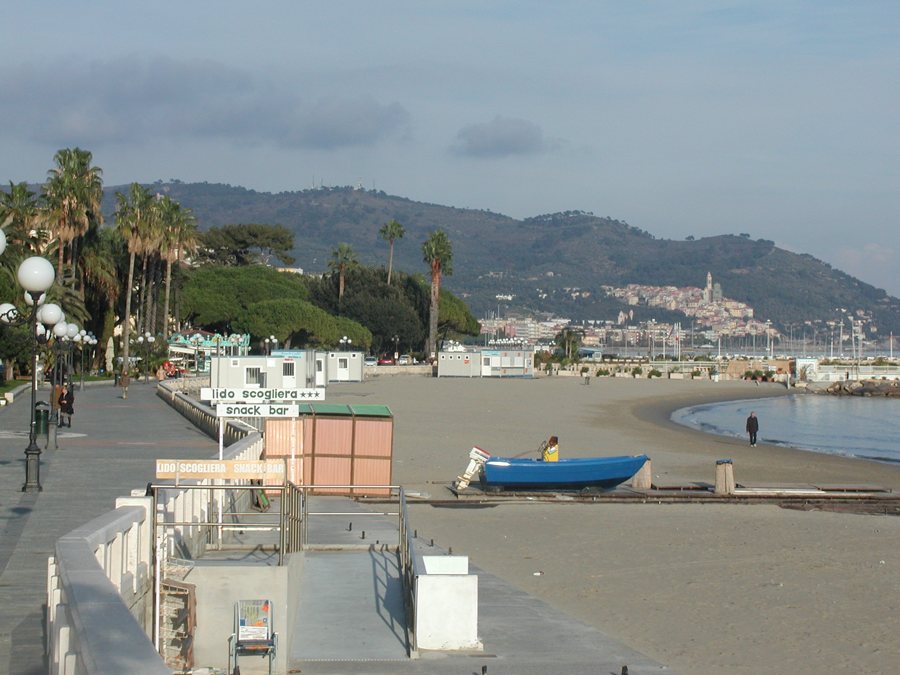 Ein blaues Boot liegt am Sandstrand neben der Promenade; dahinter erstreckt sich ein ligurischer Küstenort.
Photo: Markus Lenk
- Coastal landscape: The west has more wide sandy beaches; the east is more characterized by rocky stretches and small coves.
- Choosing a beach: Consider the terrain, access, space and proximity to a town—not just photos or names.
- Before your visit: Access, swimming conditions and beach services vary from one stretch of coast to another.
“The most beautiful beach in Liguria” is not a clearly defined category. Over short distances, the coast shifts between sand, pebbles, rocks and small sheltered coves. The scenery changes too: some beaches are right beside a promenade or town centre, while others form part of a rugged coastline and take more planning to reach. It is easier to find a suitable destination if you first decide what you want from your beach day—an easy swim, a walk, nature or a nearby town—rather than relying on a ranking of supposedly hidden gems.
Other parts of the west offer different kinds of coastline, too. In Varigotti, the coast and the town’s colourful architecture sit close together; around Bergeggi, beaches alternate with coves and stairways. Descriptions of these places can help you narrow down your options, but they do not tell you exactly how to reach the water: stairs, a path over rocks or a steep descent may not be suitable for pushchairs or people with limited mobility. If easy access is especially important to you, check in advance with the local council or an official tourist office.
In the east: coves, rocks and beaches between towns
Around Sestri Levante are two very different bays: Baia delle Favole on the western side and Baia del Silenzio on the eastern side of the peninsula. Baia del Silenzio is a small cove with sand, colourful houses along the waterfront and fishing boats on the water. It is a popular destination, so it is worth combining your visit with a walk around town rather than counting on a quiet, empty beach. The Cinque Terre also offer dramatic coastal views, but their appeal often lies as much in the villages, trails and viewpoints as in swimming itself.
The eastern coast is not one continuous stretch of sandy beaches. Some places have small pebble or rocky coves; others have waterfront areas better suited to looking out to sea than to lying comfortably on the beach. In the Cinque Terre, for example, Corniglia is not directly on the sea, while neighbouring villages have different kinds of coastal access. If you are planning a beach-only day, choose a suitable swimming spot that you can actually reach in the place you intend to visit. For an overview of the region’s landscapes, see Liguria and its landscapes.
What the Blue Flag recognises
The Blue Flag assesses individual beaches against environmental and service criteria for each award period. These include bathing-water quality, environmental management and education, as well as safety measures, available services and accessibility. For beaches, the requirements also include monitoring bathing-water quality and publishing the results. Safety equipment and accessible facilities are considered in line with the relevant criteria.
How to find the right beach
Start by comparing the terrain: sand is generally better for lying down and playing, while pebbles and rocks call for suitable footwear and different planning. Next, consider how easy it is to get there: is there an access route from town, a longer walk or stairs? At a small cove, limited space may matter more than the view. Families should also bear in mind that “shallow” is no guarantee that conditions will be the same along every stretch or on every day; currents, waves and weather can change them.
Getting there is part of choosing a beach, too. In Liguria, railway lines, coastal towns and beaches are often close to one another, but the final stretch may be farther or steeper on foot than expected. The coastal railway and the last part of the walk determine how accessible each beach is. The guide to train connections in Liguria can help you plan; if you want to spend a few days on the coast, consider accommodation in La Spezia as a base for exploring the eastern coast.
Access and beach services
Beach names and general descriptions do not reliably indicate which services will be open on a particular day or what the conditions in the water will be like. The season, weather and local regulations can all make a difference. So, shortly before your visit, check with the local area about access, swimming notices, possible restrictions and available facilities. Bring suitable footwear for rocky and pebble beaches, and have an alternative in mind for small coves in case they are busy or difficult to reach.
