
Triora: Mountain Village and History of the Witch Trials
Location and getting there
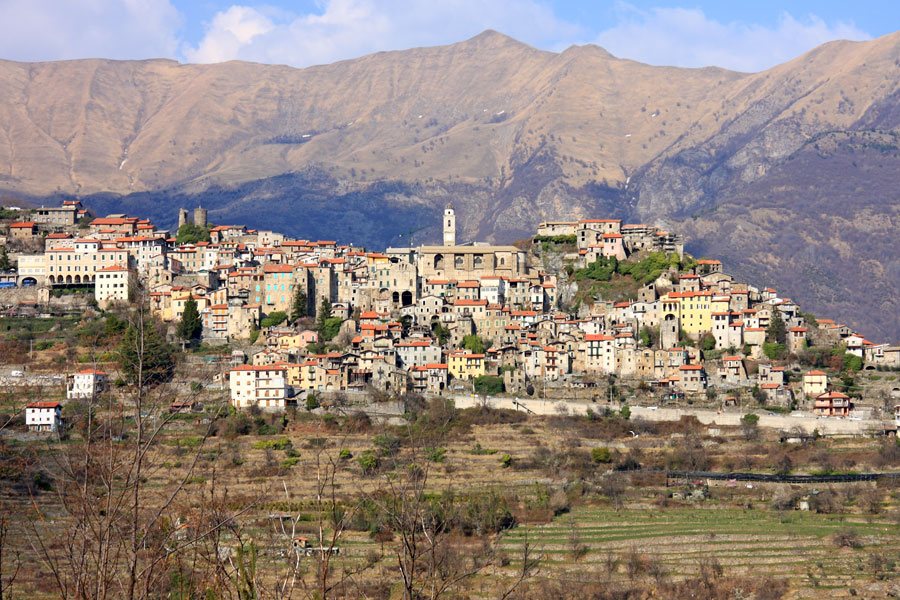
Triora lies at an elevation of around 800 metres in the upper Argentina Valley and is one of the highest mountain villages on this village route. Its old town has a medieval character and stands above an extensive mountain area, with slopes once cultivated and now covered in forest. The drive climbs inland from the coast via Taggia into the Argentina Valley. Taggia-Arma and Sanremo are the nearest coastal railway stations; from there, the mountain journey is a separate leg. If you are travelling by car, allow for the winding mountain road. Taggia makes a convenient base on the coast, while staying in the valley saves time when visiting Triora and the surrounding mountain villages.
Village square, Cabotina and the history of the trials
Start at Piazza Collegiata, by the church of Nostra Signora Assunta, and walk through the old town’s stone lanes. Another destination is Cabotina, a viewpoint associated with local tales of witches. From there, you can look out over Corte, Andagna and Molini di Triora, as well as the mountain ranges surrounding the valley. According to local tradition, Cabotina was a meeting place for witches. You can also include the church of San Bernardino, on Via San Bernardino, as a separate stop during your visit to the village.
Triora became known for its witch trials, held from 1587 to 1589. A supposed famine was blamed on the accused and became a major trigger for the persecution. The local parliament allocated 500 scudi to this end. Among those persecuted was Franchetta Borelli, who was tortured for two days. This story connects a visit to the village with the question of how economic hardship and accusations escalated into violence against people.
The Museo regionale etnografico e della stregoneria is closed for works (as of 15 November 2026). Its subject matter ranges from everyday rural life to the persecution of witches. For the current walking tour, focus on Piazza Collegiata, the lanes and Cabotina. You can then explore the landscape with a walk on the outskirts of the village or a separate excursion to one of the mountain hamlets.
Museum and upper valley
The municipality’s extensive territory includes numerous mountain hamlets. Triora is therefore also a good base if you want to do more than see the well-known lanes and spend a whole day in the highlands. Grain, wine and chestnuts were among the village’s traditional products, reflecting how closely its settlement history is tied to the use of the mountain landscape. Plan visits to the old town and the trails beyond it as two different kinds of outing.
Allow half a day for Piazza Collegiata, the lanes and Cabotina. Triora can be combined with Molini di Triora, farther down the same valley. The overview of the Province of Imperia provides useful orientation, while the Riviera dei Fiori shows the contrast with the coast. For the drive into the mountains, see the advice on driving; information on train connections to the coast is available under Train connections in Liguria. A suitable place to stay is also part of planning your trip.

