
Villages in the Hinterland of the Riviera dei Fiori: Valleys and Travel Bases
Valleys and distinctions
The western hinterland of the Riviera dei Fiori stretches across several valleys. In the Nervia Valley, Dolceacqua, Isolabona and Pigna line the same mountain road; Apricale is a steep, scenic detour above the valley. Rocchetta Nervina leads into the Barbaira side valley. Perinaldo is a hilltop village in its own right, set on a ridge. Further east are Badalucco in the middle of the Argentina Valley, and Molini di Triora and Triora in its upper reaches. These differences determine whether a brief trip inland from the coast or a full day in the valley makes more sense.
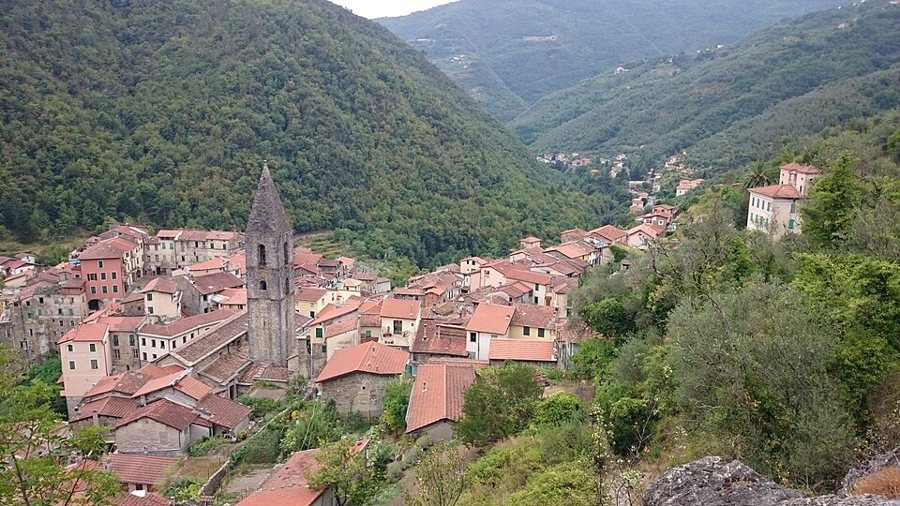
Choose villages by what you want to see
For the Nervia villages, Ventimiglia—with its rail link and road connections—is a convenient base; if you would rather stay closer to the valley, consider Dolceacqua or Isolabona. For Apricale and Perinaldo, Bordighera and Vallecrosia are coastal bases from which roads lead into the hills. In the Argentina Valley, Taggia-Arma is the right point of access from the coast: Badalucco lies further down the valley, while Molini and Triora are much further into the mountains. For these villages, staying in the valley or in Taggia is more practical than making daily trips from the western coast.
Choose according to the kind of day you want: Dolceacqua combines the Doria castle with the striking bridge over the Nervia; Apricale offers a compact walk through steep lanes to the castle and medieval square. Isolabona lies at the confluence of the Merdanzo and Nervia and makes a good short stop. Pigna offers an art-historical visit to San Michele and trails leading up into the upper Nervia Valley. In Rocchetta, the focus is on the old village and the scenery along the Barbaira stream. Perinaldo combines sweeping views with memories of the astronomer Giovanni Domenico Cassini. Badalucco has bridges, churches and painted lanes, while Triora and Molini offer two different ways to explore the upper Argentina Valley: the well-known historic mountain village and the lower-lying settlement by the river.
Travel bases and routes
The altitude also changes the character of a visit: the valley villages can be explored on short walks through town and along the river, while Apricale and Perinaldo involve climbs and longer stretches on the road. Rocchetta also offers paths along the stream; in Pigna or Triora, an outing quickly becomes a transition between the village centre and the mountain landscape. So it is not just the sights that differ, but also the ideal length of stay and the most suitable place to spend the night. If you are staying by the sea, it is best to focus on one valley per day.
If you are combining several destinations, plan them in geographic groups rather than as one long list. Dolceacqua, Isolabona and Pigna can be grouped along the Nervia; Apricale or Rocchetta make good additional detours if you have time for mountain roads and changes in elevation. To the east, Badalucco, Molini and Triora form a route of their own. The Province of Imperia provides the wider regional context, while the overview of the Riviera dei Fiori adds the coastal perspective. For getting around, the guide to driving in Liguria is useful; rail travellers can plan the coastal leg using train connections and continue inland from there. For a base, start with the guide to accommodation in Liguria; during a longer stay in the Nervia area, it is also worth exploring the Taggiasca olive and the wines of the region.

