
Dolceacqua: Castle, Bridge, and Lanes in the Nervia Valley
Location and Getting There
Dolceacqua lies in the Nervia Valley, inland from Ventimiglia. The village is dominated by the castle hill: the complex stands on a rocky outcrop above the older village and the river. It is therefore easy to think of your visit as a route from the riverbank uphill. From the coast, reach the village by following the road from Ventimiglia along the Nervia Valley. The railway runs along the coast; the final stretch into the valley is a separate leg by road. For a longer stay, consider basing yourself on the coast near a railway connection or directly in the valley. Tips on driving in Liguria and coastal train connections will help you plan the two legs together.
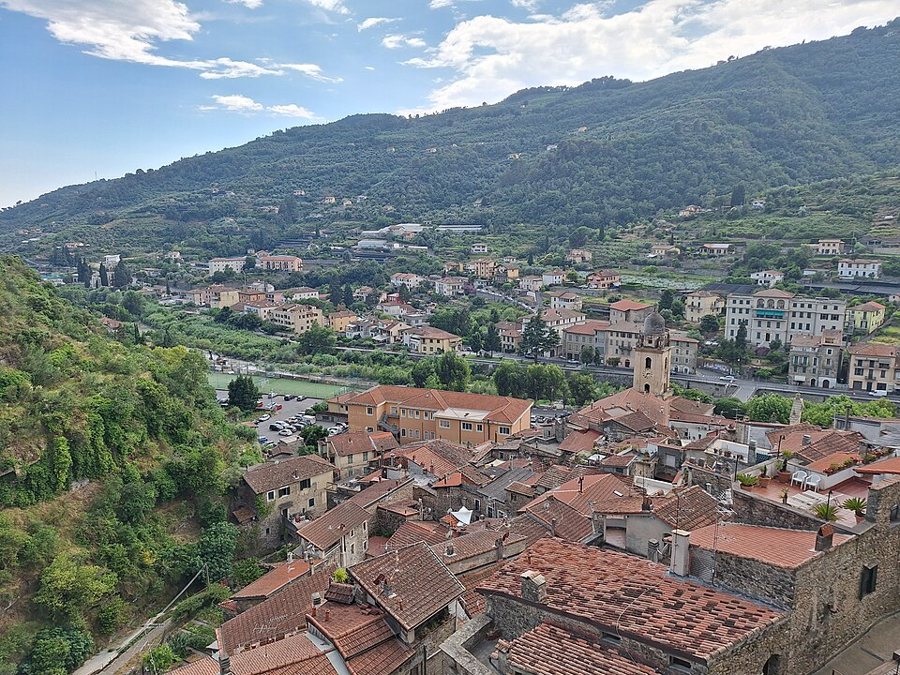
A Walk from the River to the Castle
Start at the river and the Ponte Vecchio. The stone bridge forms a striking entrance to the old town; from here, you can look across to the houses on the hillside and up toward the castle. Then follow the narrow lanes of the Borgo uphill. The change in elevation is part of the experience: rather than a level riverside stroll, expect a stepped route through stairways and narrow passageways. Allow time to pause in the small squares and take in how the houses sit between the river and the rock.
Doria Castle is the main stop at the top. The original fortification had a square ground plan and a round tower; the tower visible today dates from the second half of the 13th century. The castle was enlarged in the late Middle Ages and later developed into a residence. Today, it is also a cultural venue. Its elevated position explains why it dominates the village: from above, you can see the connection between the Nervia corridor and the steep slopes. Make the castle your upper viewpoint and combine it with a walk through the village.
Time to Visit
The old district of “Téra” and the “Borgo” area are two distinct stops on the walk. For a longer loop, take additional lanes on the way down and include the central shopping area. Sant’Antonio Abate is another possible stop on the return route; if you would like to walk farther, old paths beyond the village center lead to churches and shrines higher up. Depending on how much time you have, you can keep the walk to the compact historic center or extend it.
Half a day is enough for the route if you combine the bridge, lanes, and castle grounds; with longer stops in the village or a detour into the valley, it becomes a full-day outing. Nearby, Isolabona and Pigna make good additional stops along the Nervia River, while Apricale is a much steeper detour. The Province of Imperia provides a regional overview, and the Riviera dei Fiori offers more on the contrast between coast and hinterland. Dolceacqua lies in a landscape steeped in tradition and dotted with olive groves; learn more about the Taggiasca olive and its place in this cultural landscape. For places to stay, start with accommodation in Liguria; if you would like to pair your journey with a wine destination, you can also consult the overview of Liguria’s wines.

