
Pigna: Art and Village Trails in the Upper Nervia Valley
Location and getting there
Pigna lies in the upper Nervia Valley and is worth visiting as a full-day destination, rather than just a quick stop on the coastal road. From Ventimiglia, the route leads inland through Dolceacqua and Isolabona. The railway serves the coast; from there, the final leg to Pigna follows the valley road. The narrow valley road and elevated setting make Pigna a different base from the Riviera: here, village art and mountain scenery take centre stage. For your stay, you can think of Pigna and the smaller village of Buggio as two distinct places and landscapes to explore.
San Michele and Canavesio
In the village centre, the main route leads to the parish church of San Michele Arcangelo. The church dates from the 13th century, and its striking façade features a stone rose window. Inside is the monumental polyptych by Giovanni Canavesio. The community of Pigna commissioned the work for the church on 4 January 1500. The multi-panel altarpiece is over four and a half metres high and consists of 36 painted panels. Take time to look at it rather than treating it as just another item on your photo checklist: its figures and panels tell religious stories across several levels.
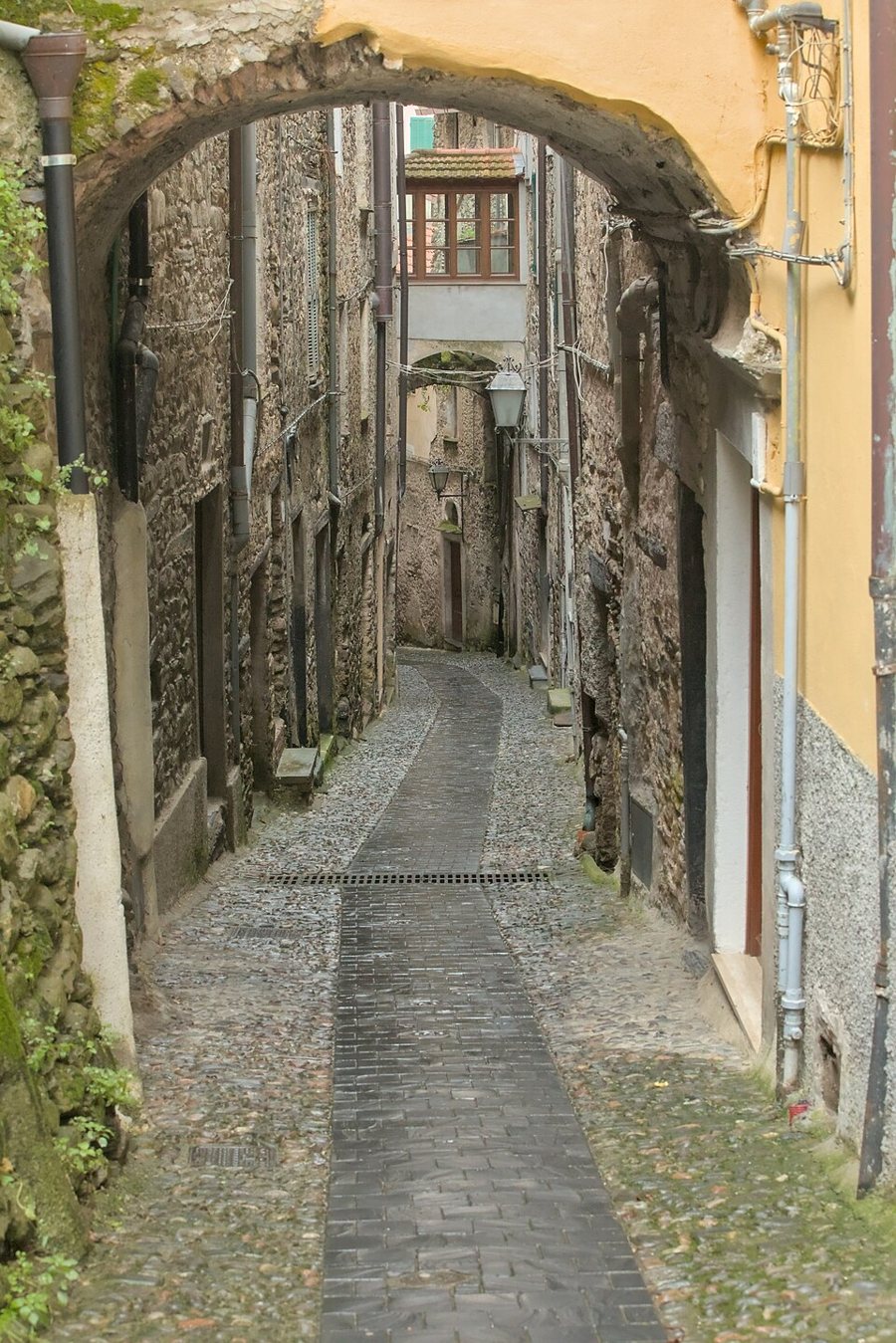
Afterwards, take a leisurely stroll through the lanes that climb the hillside from the church. The interplay of stone architecture, small squares and views across the valley makes the layout of the village easy to appreciate. Pigna is also a good starting point if you want to combine a cultural visit with a day in nature. Buggio is the municipality’s only hamlet, and the Valle delle Tane circular trail starts there. At 14.73 kilometres, with 1,513 metres of elevation gain and a stated walking time of six and a half hours, this challenging route is a full-day outing in its own right, not an extension of a village stroll. You can choose whether to focus on art and lanes or spend more time in the upper valley.
Lanes and trails in the upper valley
A further stop outside the compact village centre is San Bernardo, about a ten-minute walk from the centre. The church stands on an old route connecting the coast, Pigna and the northern valleys. From outside, the view stretches across cultivated terraces to Monte Toraggio. The village museum explores rural heritage, food and lavender, and presents agriculture and crafts from the 19th and 20th centuries. This gives you a choice between medieval art, local history and a cultivated landscape, without combining a long mountain hike with a visit to San Michele church.
Dolceacqua and Isolabona can be stops on the way to or from Pigna along the Nervia corridor. The Province of Imperia provides an overview of the wider area; the Flower Riviera highlights the contrast between coast and hinterland. If you are driving, see Driving in Liguria; rail travellers can plan their coastal leg using train connections. For a starting point for accommodation, see Accommodation in Liguria. The terraced landscape can be linked thematically to the Taggiasca olive, while the overview of wine in Liguria broadens the region’s culinary profile.

