
Riccò del Golfo: Hamlets, Stone and Sanctuaries
Riccò del Golfo is particularly suited to travellers who want to explore small village centres and rural architecture. The municipality includes the main town and numerous scattered hamlets, so it is best to plan your visit as a series of separate stops. The hamlets feature stone portals, tower houses, covered lanes and churches, offering a marked contrast with the larger coastal towns. For a first exploration, make Ponzò your historical focus, then add Quaratica or one of the higher-lying religious sites.
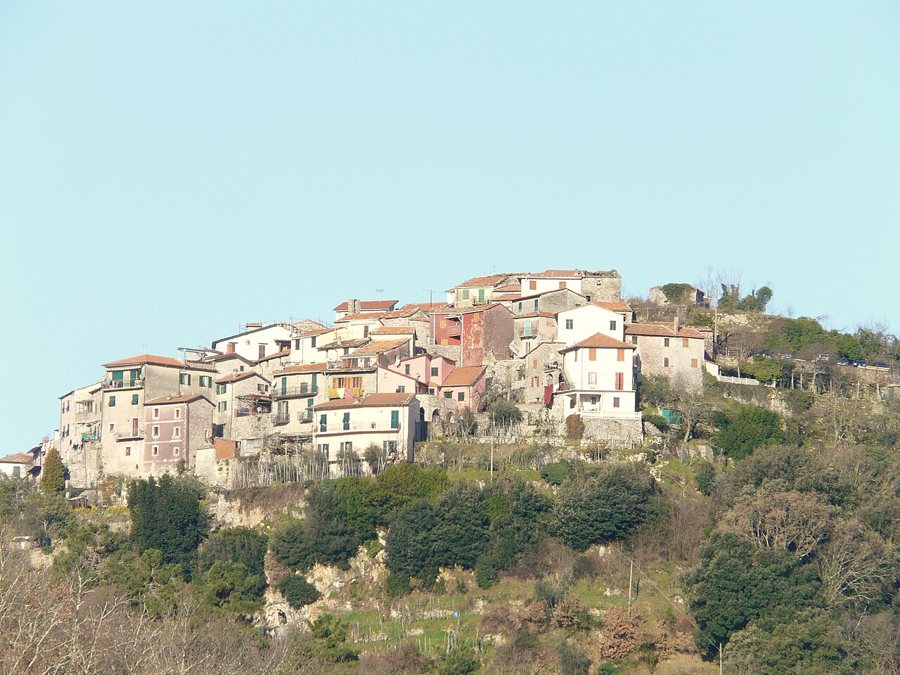
Riccò del Golfo was formed in 1808 through the unification of the territories of Ponzò and Carpena; the hamlets’ distinct histories explain why their small centres remain different to this day.
A historical walk through Ponzò
Start in Ponzò’s compact centre. The village grew in concentric rings around a castle, traces of which remain from the former fortified complex. The houses form an almost continuous outer edge, broken only by narrow lanes. At the centre is the small chapel, or oratory, of San Bartolomeo, with early Romanesque motifs. Take your time as you walk through the lanes, noticing the contrast between their close, protective layout and the openings towards the hills. For a short visit, the hamlet’s intimate scale is the main attraction; larger buildings can be found at other stops in the municipality.
Quaratica offers a very different impression, with paved paths, arches and covered passageways shaping the village. Its buildings are examples of rural architecture, where living and working spaces were closely connected. In the main town of Riccò, look for historic sandstone portals and carved or worked faces—so-called apotropaic heads—on buildings. In Valdipino, the church of San Giovanni Battista preserves a 16th-century fresco and a marble baptismal font dating to 1460. Depending on your interests, you can focus on village layout, stonework or religious art.
Sanctuaries and practical planning
For an outing to scenic viewpoints, consider the Santuario di San Gottardo on the mountain of the same name and the Santuario della Madonna dell’Agostina. From the forecourt of the Agostina sanctuary, the view stretches across Riccò and its hamlets to the Apennines and the Gulf of La Spezia. The sanctuaries are destinations in their own right, reached by paths through the hills. Ponzò, by contrast, makes for a compact village walk. Keep the road journeys between villages separate from the footpaths to the religious sites, giving each part of the outing enough time.
For travelling between the main town, Ponzò and Quaratica, it is convenient to drive and make several stops; Via Aurelia is a useful starting point in the main town. If your main interest is visiting small villages, you could stay inland here and set aside a separate day for the coast. For a wider itinerary, see the La Spezia Province guide and Varese Ligure in the upper valley. Add Levanto or a comparison with the Cinque Terre to your stay. The driving guide will help you plan your route, while the accommodation overview can help you choose between a base in the valley or on the coast.

