
Cathedral of San Lorenzo in Genoa: History and Visitor Guide
The Cathedral of San Lorenzo is one of the key sights in Genoa’s old town. Its black-and-white striped façade makes a good starting point even from the outside; inside, Romanesque features meet Gothic alterations and later works of art. To experience the cathedral as more than a photo opportunity, divide your visit into three parts: the façade and portals, the interior with its chapels, and then the underground Museum of the Treasury.
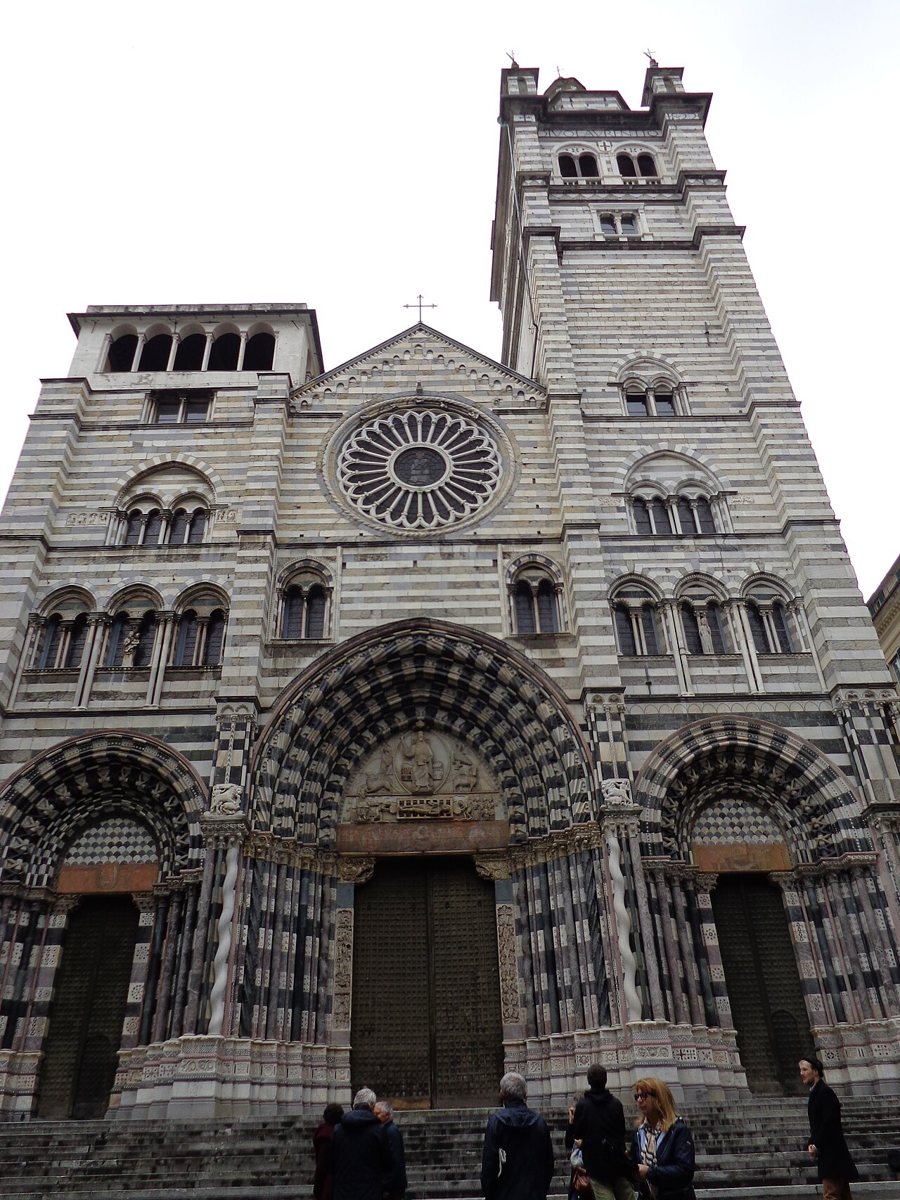
Reading the façade and its history
San Lorenzo was consecrated by Pope Gelasius II in 1118, even though construction was still incomplete. After a fire in 1296, the church was partly rebuilt and redesigned in the Gothic style; its distinctive façade with light and dark bands was created in the early 14th century. Romanesque sections were preserved. This interplay is what makes the building so interesting: take a closer look at the portals and how older and newer elements work together. In the Middle Ages, the church square was at the heart of public life in the city.
Chapels, art and the treasury
Inside, your gaze is drawn to the columns, chapels and choir area. In the left aisle is the Chapel of Saint John the Baptist, built in the 15th century and associated with the veneration of the city’s patron saint. A replica of an unexploded shell from the Second World War is also on display in the cathedral; it recalls the 1941 bombing of Genoa. This detail adds a tangible reminder of the city’s 20th-century experience to its earlier architectural history.
The Museum of the Treasury is housed in underground rooms within the cathedral. Franco Albini redesigned them in 1956; the display is considered one of the outstanding examples of modern museum architecture. Among its best-known objects is the so-called Sacro Catino, an exceptional glass vessel long believed to be an emerald and, according to legend, the chalice used at the Last Supper. Other highlights include reliquaries, liturgical objects and works dating from several centuries. The nearby cloister of the Diocesan Museum adds a look at the history of the canons and the church community.
Route and location in the city centre
Start outside in the piazza in front of the façade, then walk at an unhurried pace down the nave to the side chapels. Make the Museum of the Treasury a separate part of your visit rather than treating it as just another side room. The cathedral is in the old town, close to its narrow lanes and central squares. From here, you can continue on foot along Via San Lorenzo to Palazzo Ducale and Porto Antico. The Genoa city guide will help you place the old town in the context of your wider visit.
Visiting hours (as of 15 November 2026) are 8 a.m. to noon and 3 p.m. to 7 p.m.; visits are suspended during liturgical services. For travel from other coastal towns, the overview of train connections to and within Liguria is a useful starting point. If Genoa is part of a longer trip, compare the towns in the Province of Genoa and find suitable accommodation in Liguria. Nearby Palazzo Ducale adds another important stop in the historic centre to your itinerary.

