
Palazzo Ducale: history and culture in the heart of Genoa
The Palazzo Ducale is located on Piazza Matteotti, right by the central Piazza De Ferrari and in the heart of Genoa’s historic centre. The former residence of the doges is now a cultural centre hosting exhibitions, meetings and events. You can combine a visit with a walk through the old town: from here, routes lead to the lanes of the Centro Storico and the harbour district. For an overview of the city, see our Genoa city guide; for a route down to the waterfront, take a look at our article on the Porto Antico.
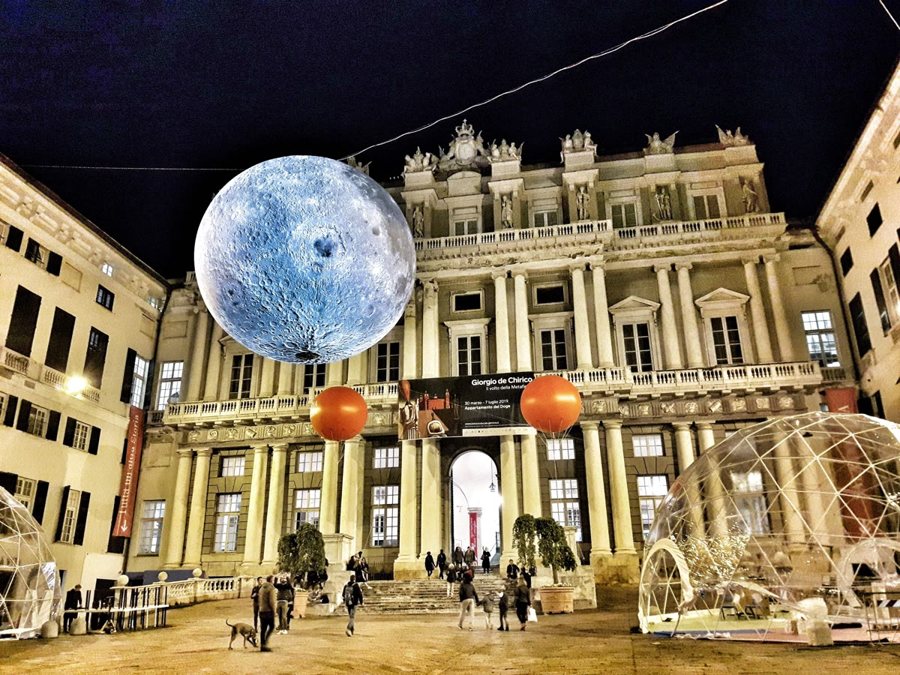
From seat of government to cultural palace
The building’s origins date back to the time when Genoa was gaining power and prosperity as a maritime republic. In the medieval city centre, two buildings belonging to the Doria and Fieschi families were acquired to serve as the seat of government. In 1339, when Simon Boccanegra became Genoa’s first doge, the palazzo became the head of state’s residence. Its position close to the centres of power of the time made the complex a political hub of the city.
Following Andrea Doria’s reforms in 1528, the palace took on a more imposing appearance. In 1591, the Republic commissioned the architect Andrea Ceresola, known as Vannone, to carry out a comprehensive redesign. He shaped the Palazzo’s Mannerist appearance: a fortification enclosed the square facing what is now Piazza Matteotti, while rooms for government and official functions combined with the defensive character of a state residence. The building offers a striking expression of the Republic’s architecture and political self-image.
Rebuilding and new uses
A fire devastated large parts of the central building in 1777, including the halls of the Great and Small Councils and the main façade. The architect Simone Cantoni led the reconstruction, giving the Palazzo a Neoclassical touch. The spiral staircase named after him is one of the building’s best-known architectural features. After the Republic came to an end, the building lost its political function and was later used for administrative offices and as a courthouse. Restoration work in the early 20th century uncovered traces of the medieval building; work carried out from 1980 onwards brought the unity of Vannone’s design more clearly to the fore.
Since 1992, the Palazzo Ducale has served as a cultural centre. The foundation organises art exhibitions, major themed programmes, talks and other cultural events. The programme changes, so the focus of a visit may vary depending on the exhibition. Anyone interested in Genoa’s history will also find a vivid setting in which to trace the city’s medieval origins, the Republic’s golden age and later renovations in a single building.
Make the most of your visit to Genoa
The address is Piazza Matteotti 9. Its central location makes the Palazzo a convenient starting or finishing point for a day exploring the city. The surrounding area is home to squares, churches and the closely interwoven lanes of the old centre. To find somewhere to stay, see our Genoa accommodation search. For travel within Liguria, our advice on train connections and driving in Liguria can help. That way, you can combine your cultural visit with other stops around the city or a trip through the region.
