
Palazzo Reale in Genoa
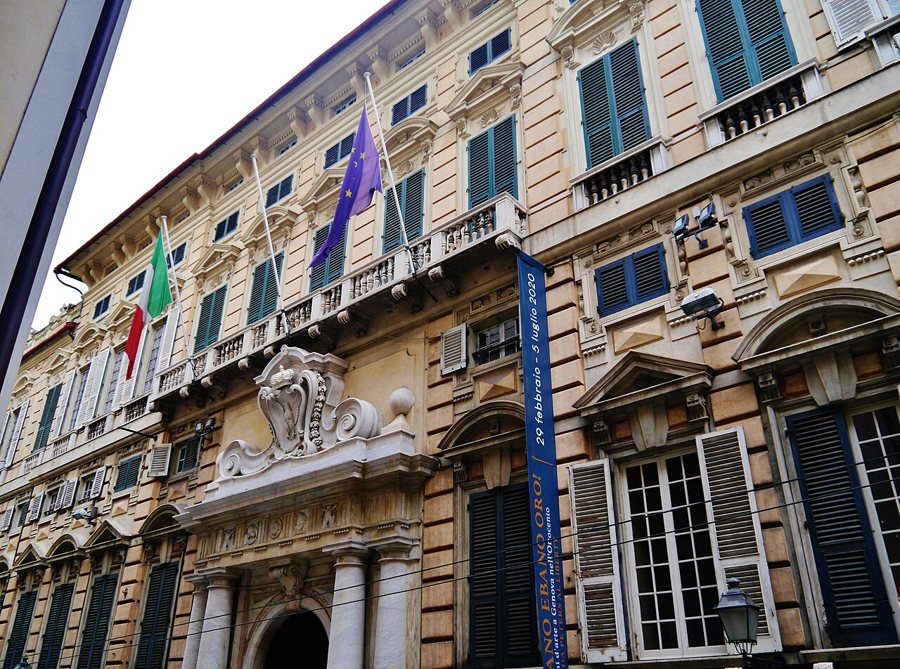
Palazzo Reale on Via Balbi is a historic residence featuring grand rooms, paintings and furnishings. The Balbi family had the palace built between 1643 and 1650; the Durazzo family expanded it with grand reception rooms before the Savoy family took over the building in 1824. This sequence explains why a visit brings together a patrician home, courtly self-presentation and royal use. So pay attention to the ceilings, furniture and wall decorations as well as to individual paintings.
The Hall of Mirrors and grand reception rooms
One of the highlights of the second Piano Nobile is the Galleria degli Specchi (Hall of Mirrors). Domenico Parodi designed the gallery in the 1720s and 1730s with an elaborate decorative programme intended to convey the Durazzo family’s status. In later years, the gallery served as a grand dining room, including during visits by Emperor Joseph II and Napoleon. The tour continues to the Cappella Gallery, which houses Filippo Parodi’s “Christ at the Column,” and then to the Throne Room. Two large-scale paintings by Luca Giordano dominate its walls.
Other rooms feature portraits, historical picture cycles and furnishings from the royal residence. In the Veronese Room, the painting “Feast in the House of Simon” takes centre stage; the Sala delle Udienze (Audience Room) houses Van Dyck’s portrait of Caterina Balbi Durazzo. Following the tour in sequence reveals how the rooms’ private and official functions changed over time. Palazzo Reale is part of the UNESCO-listed Rolli Palaces of Genoa and offers a different perspective on the city’s culture from its medieval lanes or harbour.
Getting there and access
The main entrance is at Via Balbi 10. Genoa Piazza Principe railway station is about 300 metres away, roughly a five-minute walk downhill; Darsena and Principe metro stations are also nearby. Buses stop at Balbi 2 / Palazzo Reale, Piazza Principe or Nunziata. The palace is easy to combine with Galata and the Porto Antico, especially if you arrive by train. The Porto Antico guide can help you plan a visit to the neighbouring harbour area.
A lift takes visitors to the museum on the second main floor. The official access information states that the lift door is 70 centimetres wide on the museum floor; this may be important when planning for individual mobility needs. Access to the museum does not automatically extend to every part of the palace: special areas and ancillary rooms may have different structural constraints. For planning the rest of your city itinerary, the Genoa guide is helpful; the Palazzo Ducale is a separate venue for events and exhibitions.
Palazzo Reale and Palazzo Spinola belong to the same state museum network. A joint ticket can be used to visit both palaces on different days and is valid for one year from the date of issue. The Liguria rail guide can help you plan your journey to the city; the overview of the Province of Genoa places your city visit in the context of a wider trip. If you are travelling without a rental car, the accommodation overview offers guidance on locations and transport options.

