
Finalborgo: Walls, squares and Castel San Giovanni
Finalborgo was once the seat of the Marchesato dei Del Carretto and preserves an enclosed network of walls, gates, squares and lanes. It is one of the three historic districts of Finale Ligure, separate from the seaside district of Finalmarina. It is best to start outside the walls and enter through Porta Testa, the historic gate on the western side. This lets you experience the transition from the valley into the former fortified town centre, then connect the main landmarks on foot. The Province of Savona offers further destinations along this coast.
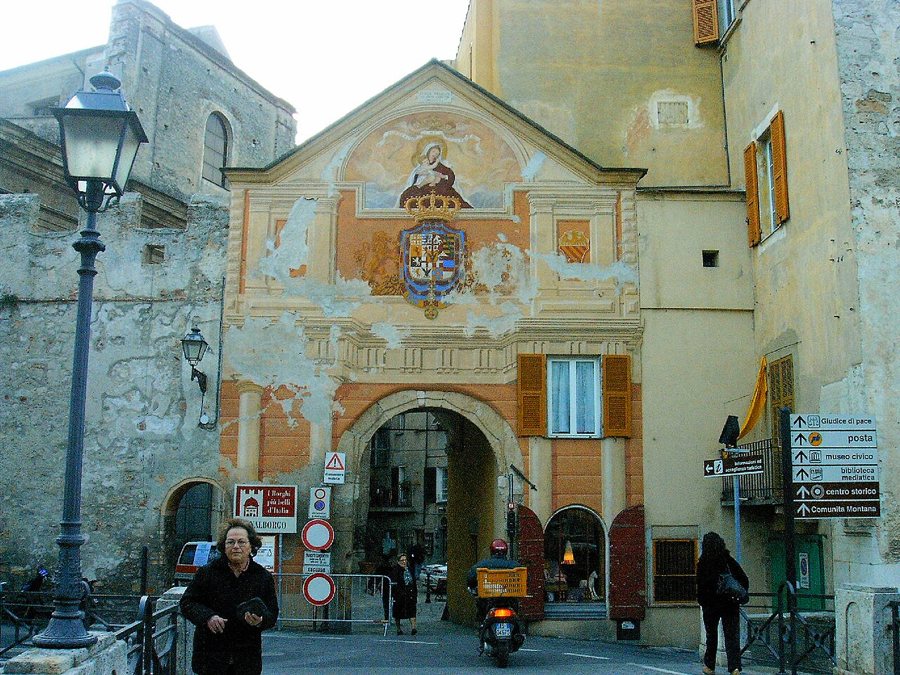
Through gates, squares and the monastery
From the gate, lanes follow the medieval street plan into the centre. The Collegiate Church of San Biagio makes a good next stop: in its Baroque interior, look out for the marble work, pulpit and balustrade adorned with angel figures. Another stop is the Santa Caterina complex, with its late-medieval cloister and the Chapel of Santa Maria degli Oliveri, whose frescoes are among the important examples of medieval painting in Liguria. Also notice the portals and columns made of pietra del Finale—a locally characteristic stone that strongly shapes the town’s character.
The town centre is also home to Palazzo del Tribunale, once the seat of justice and now a museum, and the small Teatro Aycardi, a surviving 19th-century theatre. Porta Reale and Porta Testa are prominent landmarks in the fortifications; semicircular towers interrupt the circuit of walls at several points. These stops reveal the town’s layout, from gate to square, before you add further museum visits if you wish.
Up to Forte San Giovanni
For views and more fortress architecture, climb the historic Strada Beretta to Forte San Giovanni. The structure was built in the 17th century to defend the routes into the hinterland; its present form dates from a renovation in 1644. From the terraces, the view extends over Finalborgo, the sea, and the Pora and Aquila valleys. The climb turns a visit to the town into a longer outing; treat the Forte as a separate destination, allowing enough time for the uphill walk and the views. Published admission prices are €3 full price and €2 concession (as of 15 November 2026). Plan to visit the higher fortress as a separate section after your level walk around the old town.
For a first visit, allow two to three hours for the lanes and churches; set aside more time if you plan to climb to the Forte. Street cafés, restaurants and small craft shops can be found in town, giving the historic centre a lively everyday feel.
Getting there and choosing a base
Finalborgo is close to the sea, but not on the coast; combine it with a day by the sea or stay in Finale Ligure. The Riviera di Ponente provides an overview of the coastal towns. If travelling along the coast by train, plan the final leg from the coastal corridor to the Borgo; the guide to rail travel in Liguria can help with your journey planning. If driving, take access routes and parking outside the historic centre into account; see Driving in Liguria for advice. Choose accommodation in Finale if you want to combine the beach and old town, or inland if you plan to explore several valleys.
