
Historic towns in Savona’s hinterland: nine destinations and what sets them apart
The hinterland of the Province of Savona is divided into several distinct landscapes. Close to the coast are the old town centres of Toirano, Borgio and Finalborgo; farther inland, the Neva and Bormida valleys and the Apennine forests shape the experience. Choose your destination according to what matters most: preserved urban fabric, craftsmanship, views or woodland. The Province of Savona provides an overview of the coastal and inland towns, while the guide to the Riviera di Ponente helps put the contrast between sea and mountains into perspective.
Three kinds of day out
Toirano and Zuccarello are ideal for a half- or full-day visit focused on a medieval townscape. Toirano has two surviving town gates, houses with loggias and the parish church of San Martino; the existing Toirano caves guide, by contrast, covers the karst caves. Zuccarello is especially compact: a main street lined with porticoes runs between two gates, crosses the old bridge and climbs towards a view of the castle ruins. Millesimo adds to this itinerary with its triangular layout, the Gaietta tower and the remains of the Del Carretto castle.
Finalborgo and Borgio Verezzi combine historic architecture with the coastal hillside landscape. In Finalborgo, pass through Porta Testa or Porta Reale to reach Santa Caterina, San Biagio and the squares of the walled centre; it is a distinct district of Finale Ligure, not to be confused with the beach district of Finalmarina. Borgio is by the sea, while Verezzi sits high on the hillside: the route between Borgio and Verezzi’s four stone hamlets turns a visit into a short hike. Castelvecchio di Rocca Barbena is the choice for narrow lanes, a hillside setting and views over the Neva Valley; the privately owned castle is not open to visitors.
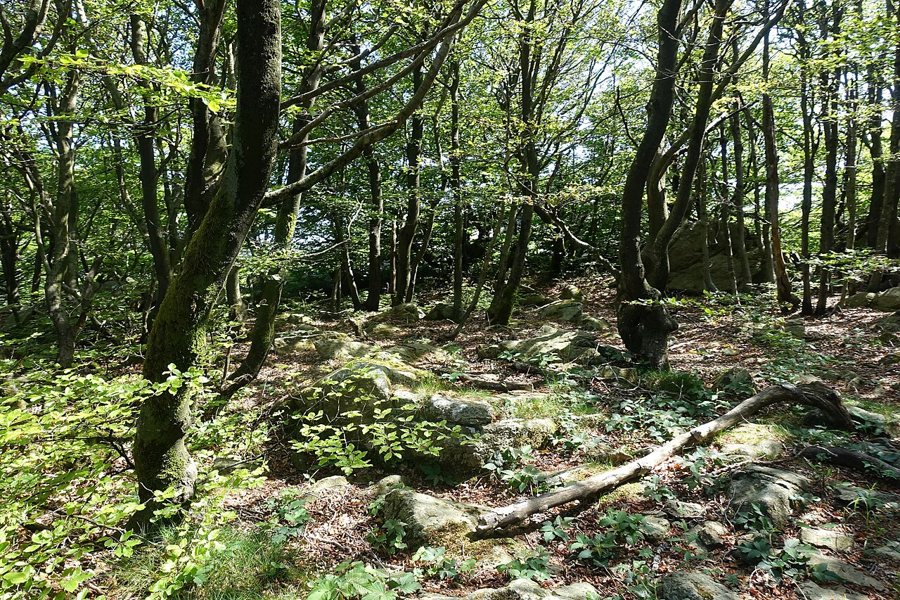
If you are looking for a museum with a clear theme, choose Altare. Housed in the Art Nouveau Villa Rosa, the glass museum displays works dating from the 17th century to the present, along with tools and media about the glassmaking process. Sassello is well suited to a day exploring both town and countryside: Palazzo Gervino and Palazzo Doria frame the historic centre, while the surrounding area opens onto the forests and trails of the Beigua region. Calizzano lies at an altitude of 647 metres on the road to Colle del Melogno and combines village life, springs and woodland; rather than a dense collection of monuments, it is a base for the mountains and nature.
Route and base for your stay
By car, it makes sense to divide a tour into separate areas: first Toirano and Finalborgo along the western coast, then Zuccarello and Castelvecchio in the Neva Valley on a second day, followed by Millesimo and Altare in the Bormida Valley. Sassello and Calizzano each lie in their own mountain and woodland settings; don’t add them as brief stops to the same day trip. The driving overview helps you plan around narrow town centres and valley roads.
For a few nights on the coast, consider accommodation in the Finale or Albenga area. If you plan to visit several inland valleys, a second base—for example, in the Bormida Valley or near Sassello—will shorten your journeys. The guide to planning accommodation in Liguria can help you organise your stay this way. Rail travellers can plan the coastal stretch separately and arrange trips into the mountains as separate onward journeys; the overview of train connections in Liguria sets out the coastal corridor. For Altare and its glassmaking tradition, the article on crafts in Liguria adds regional context to your visit.
