
Toirano: Gates, loggias and a medieval village centre
If you already associate Toirano with its caves, it is worth taking a walk through the village itself. The historic centre grew up where the Varatella and Barescione meet; the village still preserves two of its original five entrance gates, along with houses, arcades and loggias. This makes for a very different visit from the underground tour in the Toirano caves guide: in the village, the focus is on historic architecture and life in the valley in times past.
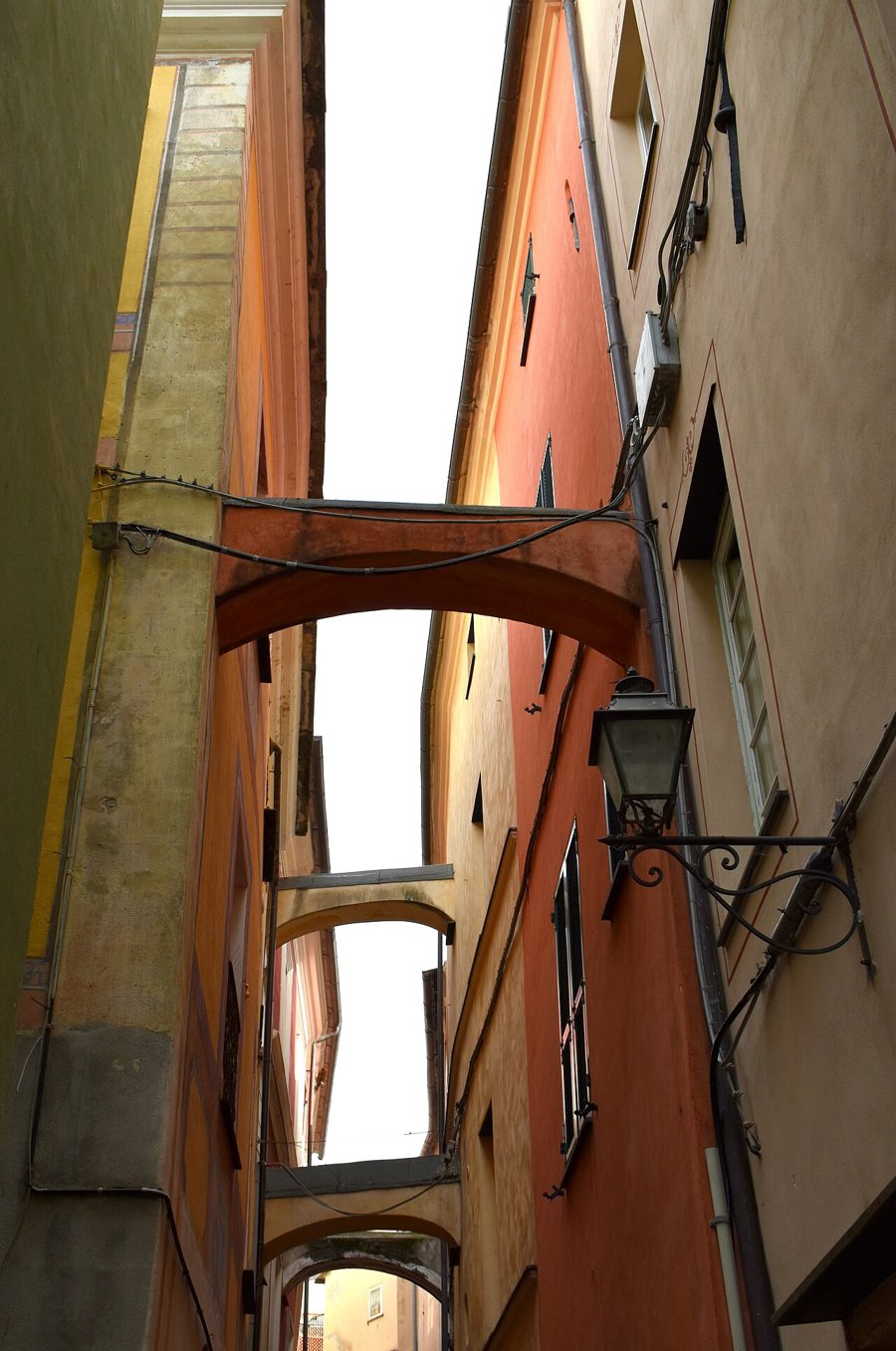
From the town gate to the parish church
Start in the old centre and walk through the surviving gates into the narrow lanes. Look out for houses whose façades reveal the village’s former defensive role, as well as the loggias and covered passageways. The parish church of San Martino is a prominent landmark: its bell tower is the village’s surviving medieval tower. Inside, you will find, among other things, an altarpiece from the early 16th century. The square in front of the church makes a peaceful stopping point before you explore the old edge of the village and its connection to the valley floor. The medieval three-arch bridge over the Varatella is also part of the historic village landscape; north of the village stand the church and bell tower of the Certosa, whose construction was begun by the Carthusians in the late 15th century.
Santa Lucia and life in the valley
If you have time and the energy for a climb, you can combine your visit with the Santuario rupestre di Santa Lucia. The church stands on the southern slope of Monte San Pietro and partly encloses the entrance to a natural cave. The Grotta di Santa Lucia Superiore, which contains the rock sanctuary, is open to the public only on special occasions. Inside, a staircase leads to the altar and a marble sculpture of Saint Lucy; beyond it, the cave continues into the mountain. For an ordinary village visit, make the forecourt, with its views across the landscape, an additional outdoor stop. The site has both religious and scenic significance, offering a different perspective on the surrounding area from the densely built village centre. You can plan this as a second stage of the day, rather than as part of a short walk through the lanes.
The Museo Etnografico della Val Varatella adds to the story of the village with exhibits on farming, wine and olive growing, and traditional work in the valley. Its collection includes 1,400 tools and objects displayed across 18 themed sections on three floors, illustrating earlier working practices. Together, the old town, church, sanctuary and museum make for half a day to a full day of cultural sightseeing; the caves are a separate additional activity. This means you can still enjoy a worthwhile visit to the village even if caves are not your main focus.
Getting there and choosing a base
Toirano lies about three kilometres from the sea, in the Varatella valley. A car is useful if you want to combine your visit with other inland villages; you can explore the village centre on foot. If you are staying on the Riviera di Ponente, Toirano works well as a day trip combined with another nearby destination. The driving advice can help you plan your journey along Liguria’s village and valley roads, while the overview of the coastal railway describes train travel along the coast. For an overnight stay near the area, see the Liguria accommodation guide; you can add other destinations in the Province of Savona depending on your route.
